
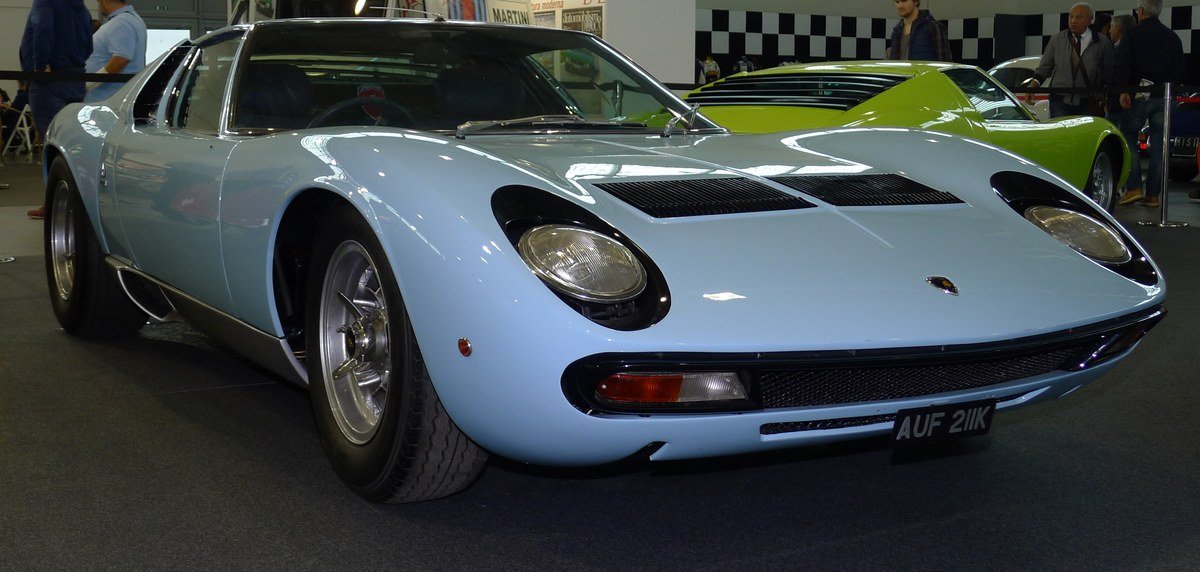

A Lamborghini Miura SV, registration AUF 211K, at Verona Legend Cars in May 2016. Photograph by Vllmtt, CC BY-SA 4.0. Resized and JPEG recompressed; no additional crop or scene changes. Photo remains under this license; no endorsement implied.

The Lamborghini Miura SV’s wider rear body is a useful starting point for understanding the car, provided the discussion continues underneath it. The shape accompanied changes to the chassis, rear suspension and wheels. For a collector evaluating an individual example, that relationship is more informative than relying on exterior identifiers alone.
Lamborghini’s April 14, 2021 retrospective dates the SV’s introduction to March 1971. This is historical engineering context, not a current announcement. BBE serves US buyers; a Miura SV search brief should make both the exact variant and the required documentation clear.
Separate track width from wheel width
In its official SV retrospective, Lamborghini describes a reinforced, stiffer frame and revisions to the rear suspension’s mounting points and arm shapes. Rear track increased by almost 130 millimeters (approximately 5.1 inches). Rear wheel width grew from seven to nine inches, with different tire sizes front and rear, and the body gained wider rear fenders.
Track width and wheel width describe different dimensions. One concerns the lateral spacing of the wheels; the other concerns the width of an individual rim. Reading both figures as simply “wider tires” loses the distinction, as well as the importance of the suspension changes that accompanied them.
For a buyer, the reasonable inference is that appearance alone cannot establish the complete specification. A wider-looking rear stance does not tell you which suspension parts are fitted or whether their arrangement matches the car’s documented identity.
Build the assessment around the individual car
Start with the identifying records and have a specialist reconcile them with the car presented. Then ask what evidence establishes its current chassis and suspension configuration. The aim is to connect the history, the physical car and the advertised description, rather than treating any one of them as sufficient by itself.
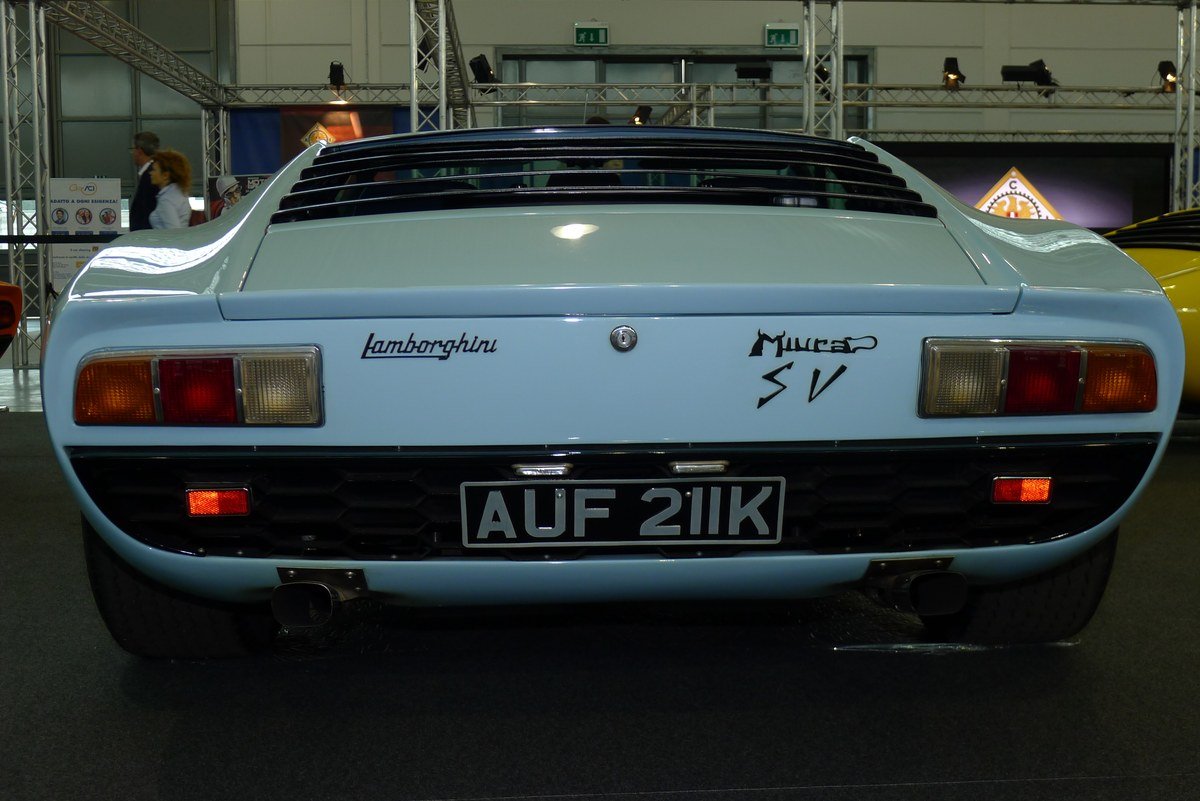
The same Miura SV photographed from the rear at the 2016 display. Photograph by Vllmtt, CC BY-SA 4.0. Resized and JPEG recompressed; no additional crop or scene changes. Photo remains under this license; no endorsement implied.

A useful inspection report can separate three questions: what configuration the records describe, what equipment is presently fitted and what condition that equipment is in. Those answers may require different evidence. A restoration invoice can describe work performed, while a current inspection addresses what is observable now.
Where an area cannot be assessed during the agreed inspection, ask for that limitation to be stated. An unanswered question should remain visible in the report rather than disappearing into a general description of a car as restored or excellent.
Read restoration work with the chassis in mind
Ask for the available photographs, measurements and workshop records relating to structural or suspension work. A polished exterior need not be criticized to acknowledge that it cannot answer every mechanical question. Equally, documented repair work should be evaluated on its evidence rather than treated as automatically disqualifying.
Wheel and tire details belong in that review. Have the specialist assess the fitted specification against the appropriate documentation, including any deliberate changes. Do not assume a current fitment is correct merely because it fills the wheel opening convincingly.
Our Countach 5000 QV specification guide addresses a different Lamborghini, but shares the useful discipline of establishing the exact car before comparing examples. Its technical details should not be transferred to a Miura.
Keep the purchase brief grounded
For a US buyer, the next decision should rest on the specific car’s records, condition and suitability for the intended ownership plan. This guide does not certify authenticity, establish import status or predict value.
BBE’s car-search inquiry can record the SV specification and specialist review you want. The engineering history helps define better questions; the evidence for the individual car must answer them.