

Big Boy Exotics serves exotic-car buyers across the United States. Tell us about your car search.
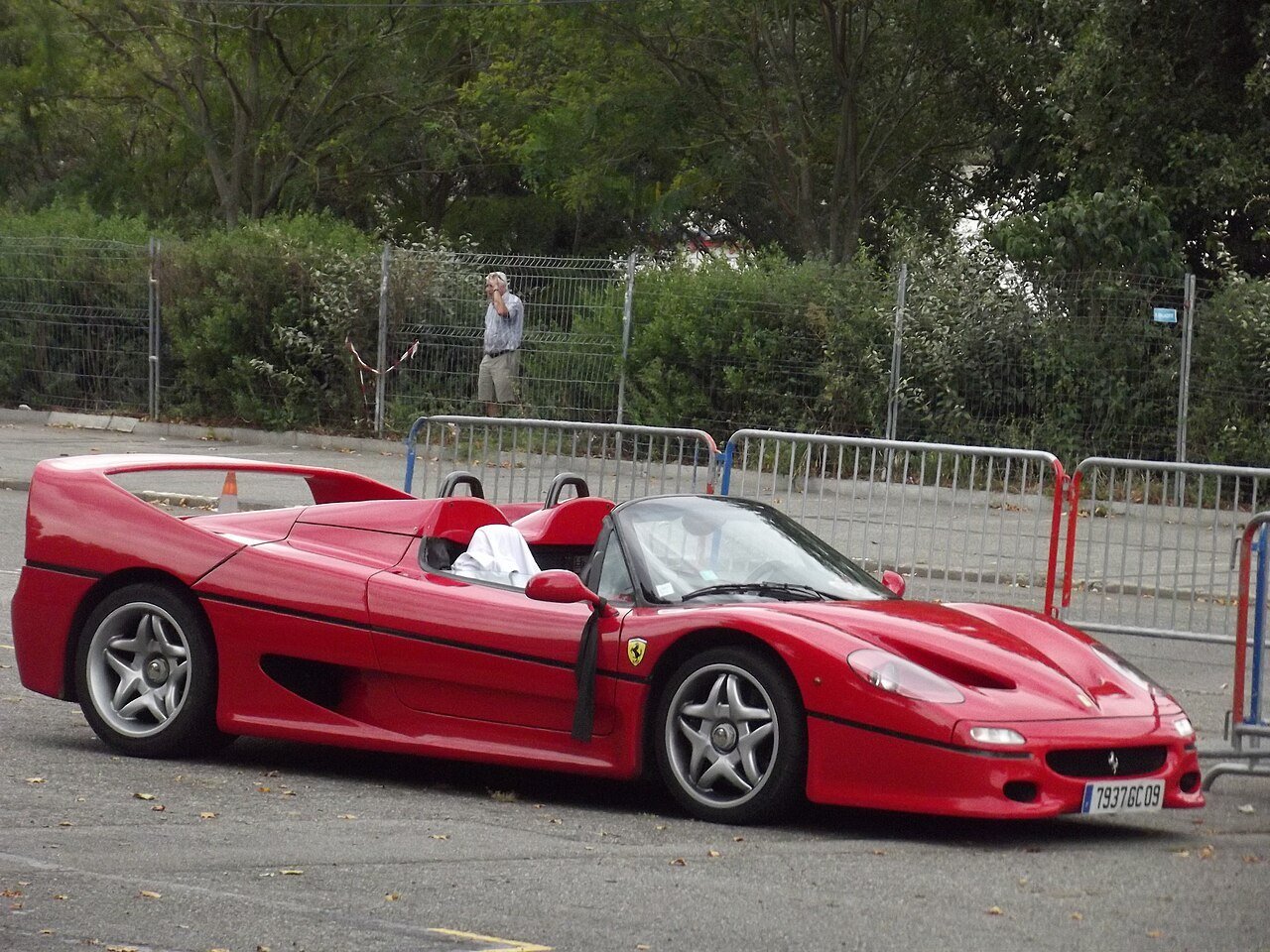
Cover: Ferrari F50 Toulouse, Handelsgeselschaft; CC BY-SA 4.0. Wikimedia resize; otherwise unchanged. Illustrative reference photograph. Compact-delivery image resized and JPEG-compressed; no cropping or content edits.

The Ferrari F50 has an unusually literal connection between engine character and chassis design. Its V12 helps carry structural loads. That decision makes the engine part of the architecture surrounding the driver, and it explains why judging the car only by power or production numbers misses much of its appeal.
Ferrari introduced the F50 at Geneva in 1995. The company’s technical retrospective describes a carbon-fiber passenger cell, with the V12 attached behind it as a load-bearing member for the transmission and rear suspension. For a prospective owner, this is the starting point for understanding both the driving experience and the evidence worth requesting before purchase.
Follow the load path
Many road cars carry an engine inside a supporting structure. In the F50’s arrangement, the engine itself participates in the structural connection toward the rear of the car. In plain language, it does two jobs: producing power and helping hold the assembly together under load.
Ferrari links this construction to stiffness and weight benefits, while acknowledging that engine vibration reaches the passenger cell more directly. Its account also describes pushrod suspension with horizontally arranged springs and dampers. These were deliberate engineering decisions aimed at a particular kind of road car.
The practical inference is that an F50’s engine, chassis and suspension history should be read together. A mechanical invoice may matter to the structural story; a record of rear-end work may matter to the way the engine and driveline were supported or reassembled. An experienced inspector can explain those connections without treating every previous repair as disqualifying.
Ask for a chronological record of major work, including who performed it, which components were involved and what checks followed. Where a document simply says “engine work,” seek a fuller explanation. The goal is a coherent history that a future servicing specialist can actually use.
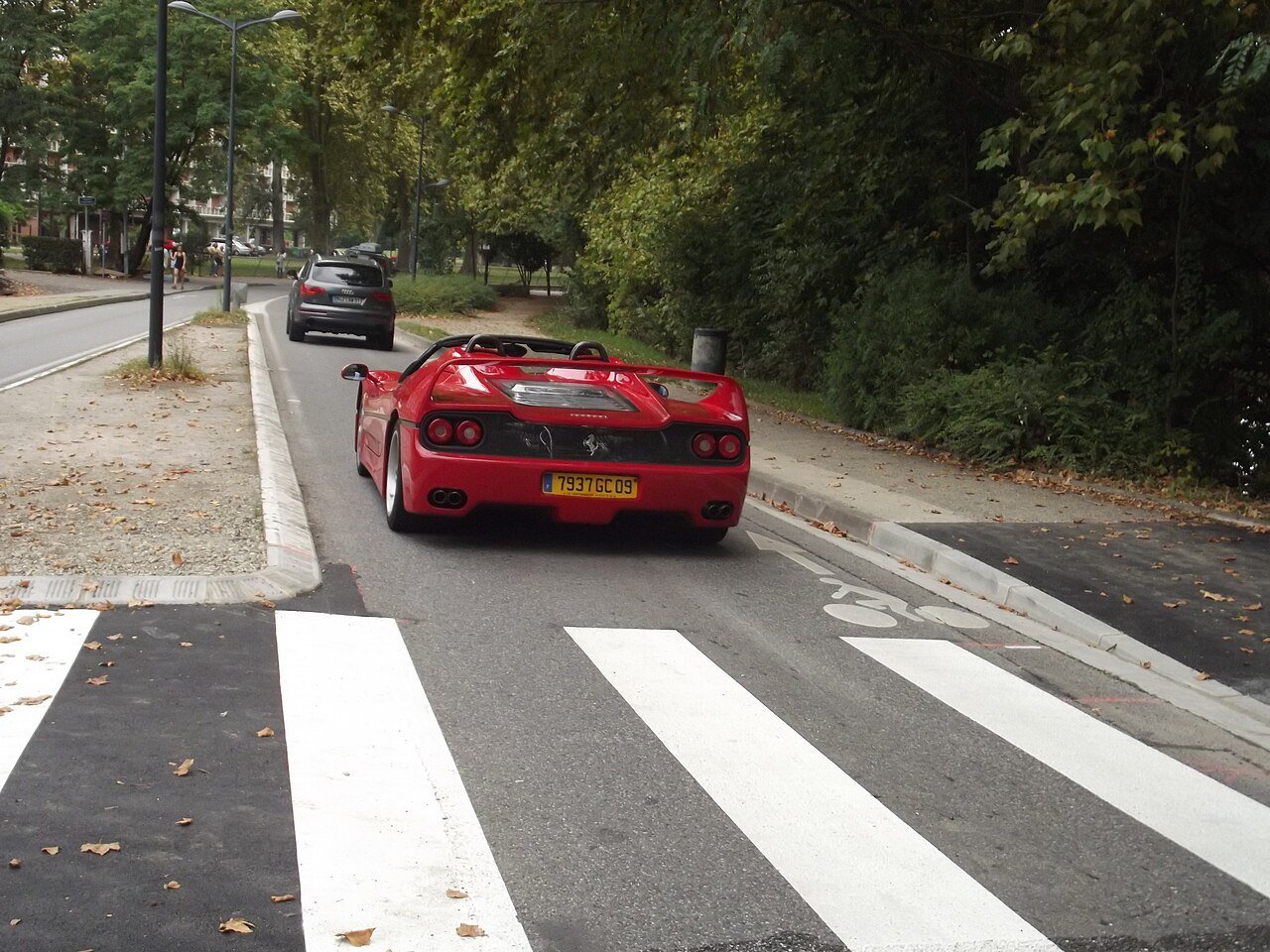
Photo: Ferrari F50 rear Toulouse, Handelsgeselschaft; CC BY-SA 4.0. Wikimedia resize; otherwise unchanged. Illustrative reference photograph. Compact-delivery image resized and JPEG-compressed; no cropping or content edits.

Experience the design at ordinary speeds
A potential owner does not need a high-speed demonstration to discover whether the F50 suits them. Seat fit, pedal reach, steering effort during normal maneuvering and the amount of sound reaching the cabin are meaningful observations in their own right.
Ferrari’s 2025 F50 technical background confirms the removable roof and absence of ABS and power-assisted steering. A driver arriving from a modern supercar should make time for an informed handover. Keep the initial route calm, leave generous margins and discuss any unfamiliar behavior with a model specialist.
These characteristics can be central to the pleasure of ownership. They also deserve a realistic assessment before a car is transported across the country. Arrange the viewing around the conditions in which you expect to use it, including the roof configuration you prefer.
Original character can include modern support
Preservation also involves consumables. In its May 5, 2025 announcement, Ferrari described a dedicated Legacy Tour version of Pirelli’s P Zero Corsa System Collezione tire for the F50, with event-specific sidewall branding. This is useful historical evidence of continuing model-specific support.
It does not establish present US stock or the correct purchase for every example. Have the servicing shop verify current fitment guidance, availability and condition before recommending tires. Keep those recommendations with the car’s records.
An F50 makes the most sense when the buyer values its complete engineering concept. A documented, carefully prepared example allows that concept to be understood as an ownership experience, rather than reduced to a photograph of a V12.
From the Journal
Ferrari Testarossa: What the Side Strakes Tell a US Buyer
Looking for a particular exotic car? Start your private search with Big Boy Exotics or send your car-sourcing brief to info@bigboyexotics.com.