

Big Boy Exotics serves exotic-car buyers across the United States. Tell us about your car search.
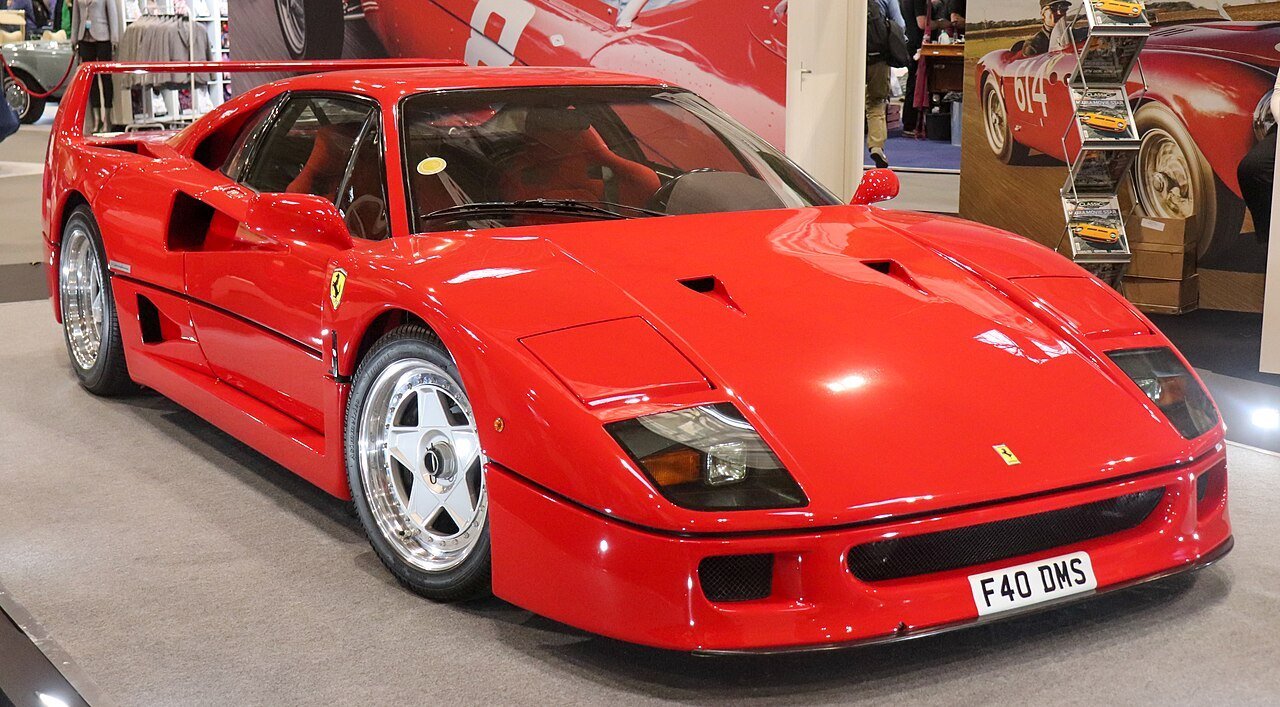
Cover: 1990 Ferrari F40 2.9 Front, Vauxford; CC BY-SA 4.0. Wikimedia resize; otherwise unchanged. Illustrative reference photograph. Compact-delivery image resized and JPEG-compressed; no cropping or content edits.

An F40 photograph usually gives the rear wing most of the attention. The more consequential feature for someone intending to drive the car is the relationship between its engine, its controls and the person in the seat. A useful purchase brief begins with the experience Ferrari intended, then asks how faithfully a particular example still delivers it.
Ferrari unveiled the F40 on July 21, 1987. Its factory historical account describes a twin-turbo V8 with two intercoolers and a deliberate decision to leave out electronic systems intended to assist less experienced drivers. Those choices belong together. They explain why an F40 deserves its own familiarization process, even when a buyer already owns powerful modern cars.
Read the engine as a complete system
The manufacturer’s 2017 retrospective identifies a longitudinal 2.9-liter V8, water-cooled IHI turbochargers and four valves per cylinder. Its peak-power figure occurs at 7,000 rpm. The engine’s character therefore involves more than displacement or a headline output number.
A turbocharger uses exhaust energy to compress incoming air. The intercooler then removes heat from that compressed air before it reaches the engine. The response a driver feels depends on the coordinated operation of this equipment, the engine’s operating conditions and the control system. Treat a seller’s description of unusually strong performance as a reason to establish the actual specification.
Ask a qualified F40 specialist to compare the installed turbochargers, intake plumbing, intercoolers, exhaust and engine-management equipment with the car’s documented configuration. The important result is an understandable account of what has changed, why it changed and whether the work was verified afterward. A folder of invoices becomes more useful when each major entry can be connected to a component still on the car.
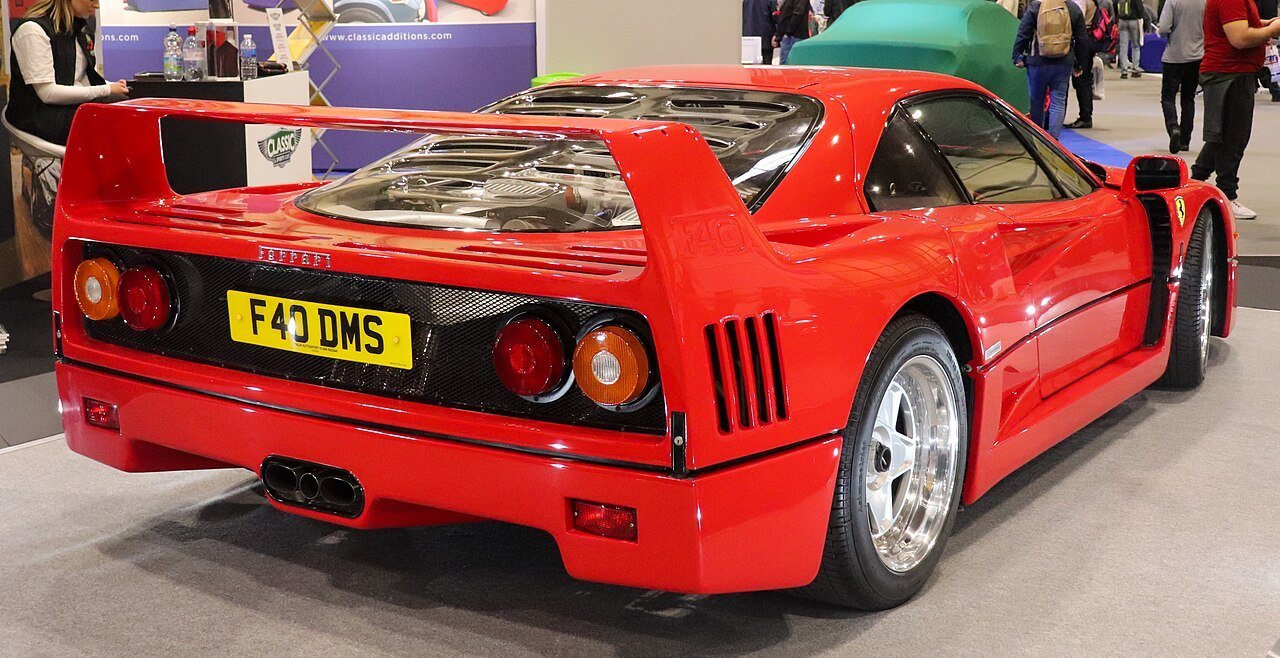
Photo: 1990 Ferrari F40 2.9 Rear, Vauxford; CC BY-SA 4.0. Wikimedia resize; otherwise unchanged. Illustrative reference photograph. Compact-delivery image resized and JPEG-compressed; no cropping or content edits.

Separate preservation from preparation
Ferrari’s retrospective also describes unassisted brakes and a cabin built around cloth bucket seats and basic switchgear. Its sparse equipment was central to the original road-car concept. A buyer looking for an F40 experience should decide how much of that simplicity is part of the attraction.
This creates two parallel questions. Is the example historically consistent with its original build? Is it ready for the driving you plan to do? A car can look carefully preserved while still needing tires, fluids or other age-related attention. Conversely, recent maintenance can support usable originality when the work is documented and appropriate.
Request a written assessment that keeps historical specification, present condition and proposed work separate. Include photographs of removed parts when available, along with the reasons replacements were fitted. Avoid assuming that an original-looking engine bay establishes mechanical readiness or that every replacement automatically diminishes the car.
Build the first miles into the purchase
For a US owner, the handover should include time with someone who knows the model, the correct operating literature and a route appropriate to the car’s condition. Establish warm-up practices, instrument meanings and parking procedures before collecting it. Keep any performance exploration for a suitable controlled environment with qualified instruction.
Budget separately for acquisition, documented recommissioning where necessary, transport and familiarization. Obtain actual US-dollar estimates from the specialists doing the work; an asking price cannot predict those costs.
The most satisfying F40 purchase brief is specific about the behavior being sought. Preserving its original turbocharged character means understanding the complete car and preparing the next owner to use it thoughtfully.
From the Journal
Ferrari Testarossa: What the Side Strakes Tell a US Buyer
Looking for a particular exotic car? Start your private search with Big Boy Exotics or send your car-sourcing brief to info@bigboyexotics.com.