
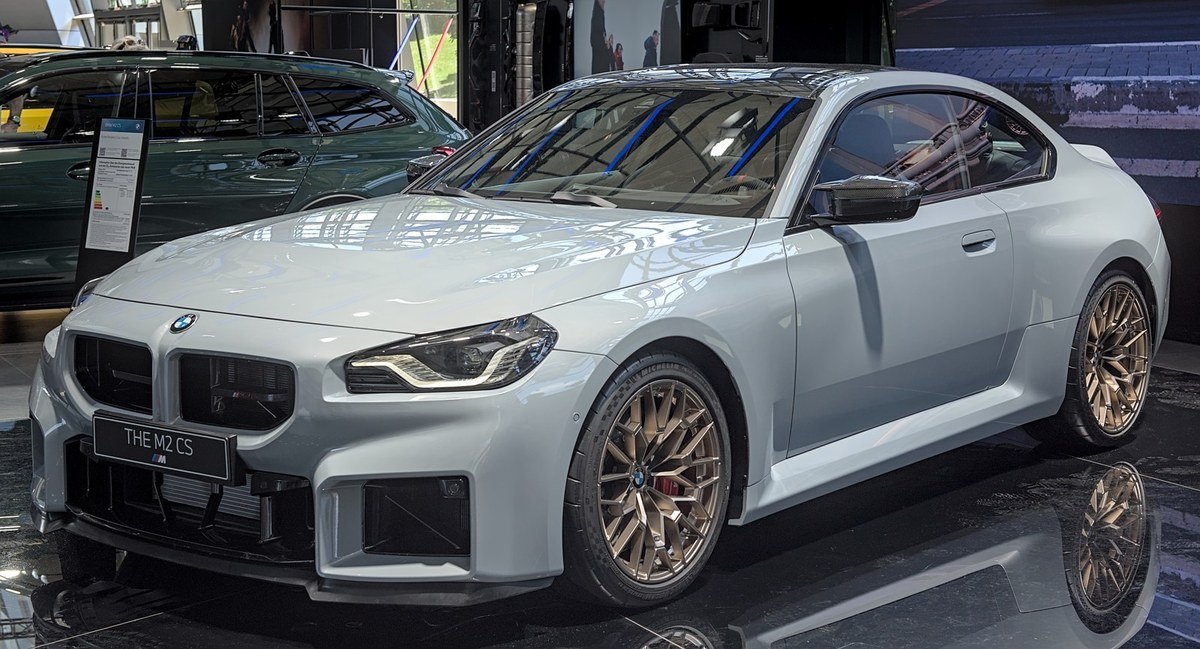

M2 CS at BMW Welt in May 2025; European display specification shown. Photograph by Alexander Migl, CC BY-SA 4.0. Resized and JPEG recompressed; no additional crop or scene changes. Photo remains under this license; no endorsement implied.

The G87 BMW M2 CS is compelling because its upgrades form a coordinated package. Buyers considering one can start a nationwide U.S. sourcing request with the second-generation CS specified clearly. The first question should be what the package adds to your driving, beginning with the baseline behind its weight claim.
Keep the comparison like for like
BMW’s May 27, 2025 U.S. announcement introduced the 2026 M2 CS with 523 hp, rear-wheel drive and an eight-speed M Steptronic automatic. It quoted a 97-pound reduction against the standard M2 equipped with that automatic transmission. The comparison matters: a headline weight saving is meaningful only when the underlying configuration is identified. BMW also announced a base MSRP of $98,600 plus $1,175 destination and handling. That is historical launch MSRP, not a current asking price or resale valuation. BMW’s U.S. launch material provides those details.
The same release describes carbon-fiber-reinforced-plastic components, forged wheels and model-specific suspension calibration. A carbon trunk lid incorporates the ducktail spoiler. The chassis sits 0.2 inch lower, while springs, dampers and control systems receive CS-specific settings. Heated M Carbon bucket seats are standard. Taken together, these changes make the CS a specification to experience as a whole, rather than a collection of decorative carbon parts.
For the buyer, that means resisting a simple price-per-horsepower calculation. Ask whether you want the seating position, steering response and road behavior associated with the complete car. Someone who enjoys a special coupe mainly on long journeys may weigh those qualities differently from a driver planning regular closed-course instruction.
Put the Nordschleife result in its proper place
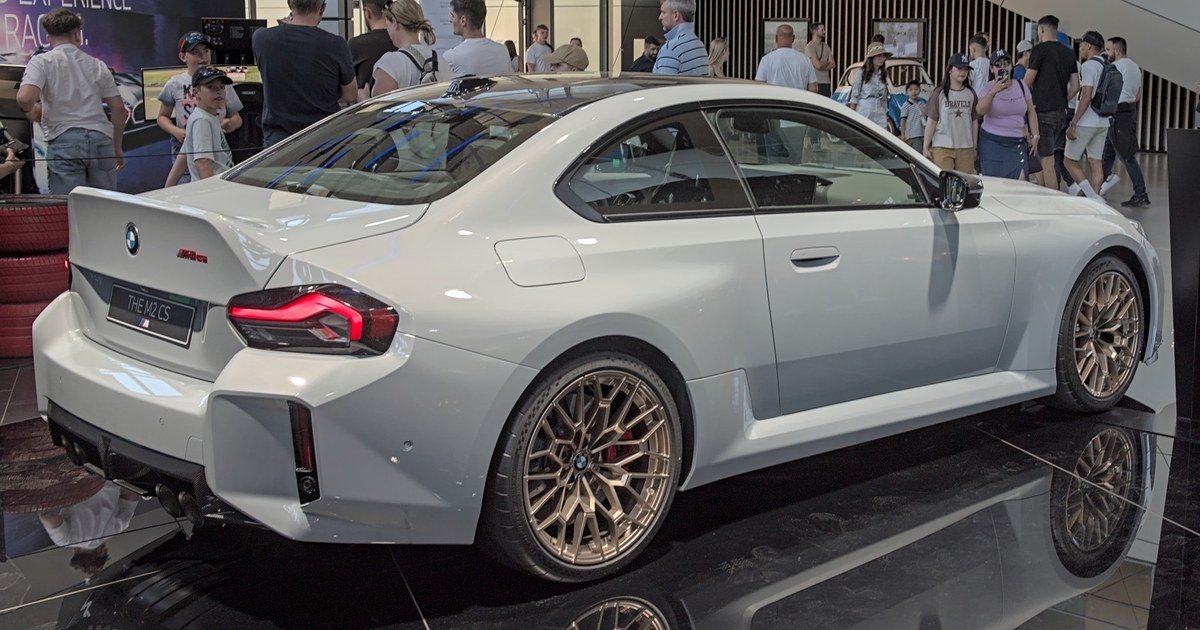
M2 CS at BMW Welt in May 2025; European display specification shown. Photograph by Alexander Migl, CC BY-SA 4.0. Resized and JPEG recompressed; no additional crop or scene changes. Photo remains under this license; no endorsement implied.

On July 3, 2025, BMW reported a 7:25.5 Nordschleife lap, driven by development engineer Jörg Weidinger on April 11 that year. BMW described it as a compact-car record at the time. The published U.S. account uses a 12.9-mile circuit length. This remains a useful development achievement; it is not evidence of a fresh October 2026 record or a promise that an owner will match it. BMW’s dated lap announcement preserves the context.
A lap time compresses a complicated experience into one number. It cannot tell you how readily you settle into the seat, whether the controls suit your reach or how a particular car feels on broken pavement. Those are not minor qualifications to a performance purchase. They determine how often you will choose the car when the keys are available.
Test the package where it matters
Spend enough time in the actual seats to establish a comfortable position. Try normal entry and exit, then assess visibility and pedal reach. Our M4 CSL bucket-seat discussion offers useful questions about personal fit, while the M2 CS must be evaluated on its own equipment.
Read the tire sidewalls and the option record together. A photograph of gold wheels cannot establish which tire specification is fitted today. If the car has been used on track, ask a specialist to interpret service records, brake condition and alignment evidence in that context. The goal is an informed assessment of this example, without assuming that track use automatically establishes either neglect or meticulous care.
The right CS purchase should remain convincing after the lap-time conversation ends. Source a BMW M2 CS through Big Boy Exotics nationwide with the generation, equipment, intended use and budget made explicit from the start.