
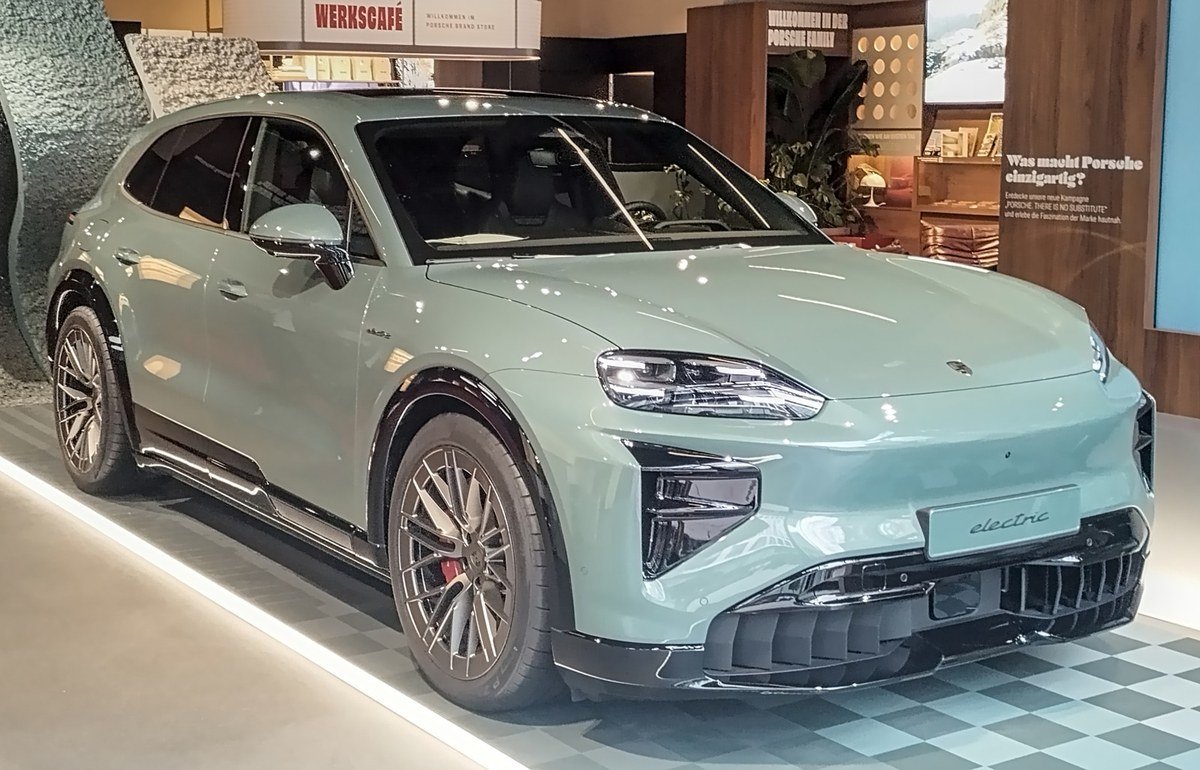

Cayenne Turbo Electric in Stuttgart on February 2, 2026. European display example; not BBE inventory. Photograph by Alexander Migl, CC BY-SA 4.0. Resized and JPEG recompressed; no additional crop or scene changes. Photo remains under this license; no endorsement implied.

An electric performance SUV needs to manage the drive after the first acceleration run. Build your nationwide US car search with Big Boy Exotics around the trips you actually make. The Porsche Cayenne Turbo Electric makes heat management an especially useful subject: its rear motor and high-voltage battery approach the problem in different ways.
Porsche’s November 19, 2025 US launch announcement listed up to 1,139 hp with Launch Control and a manufacturer-claimed 0–60 mph time of 2.4 seconds. These are conditional performance figures. Understanding the equipment supporting them gives a buyer more context than treating the largest number as an always-available operating state.
Bring cooling closer to the heat
In a November 5, 2025 technical explanation, Porsche described direct oil cooling for the flagship’s rear motor. Instead of relying on coolant circulating around the outside of the stator, liquid travels along the copper conductors through stator grooves. The aim is to remove heat closer to where it is produced.
Porsche traced this approach through its Formula E program and the GT4 e-Performance test vehicle. The connection is specific: a thermal-management technique moves between projects. It does not make the SUV mechanically identical to a race car, or prove that every road or track session will produce the same performance.
The ownership implication is repeatability. A headline launch happens briefly; a demanding climb, repeated acceleration or sustained high load asks the powertrain to keep managing temperature. Direct cooling helps explain the engineering emphasis on continuous output, even though a buyer still needs to understand the vehicle’s operating conditions and protections.
The battery has two temperature-control faces
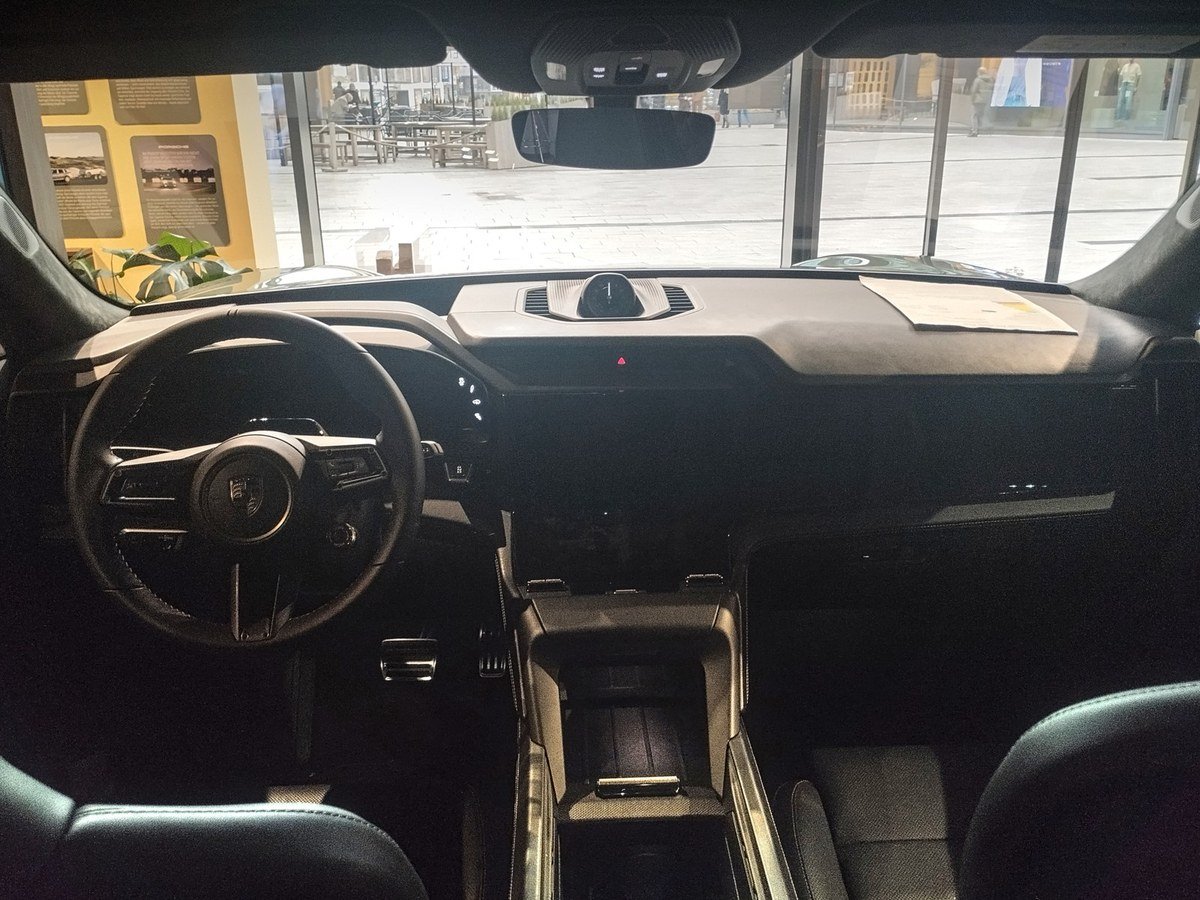
Cayenne Turbo Electric cockpit photographed in Stuttgart on February 2, 2026. Photograph by Alexander Migl, CC BY-SA 4.0. Resized and JPEG recompressed; no additional crop or scene changes. Photo remains under this license; no endorsement implied.

Porsche’s February 2, 2026 production update confirmed that Cayenne Electric manufacturing had begun in Bratislava. It also described the 113-kWh gross-capacity battery and temperature-control plates above and below it. Those plates can cool or heat the pack as required. Gross capacity should not be confused with energy a driver can necessarily use.
Heat management also connects to the structure. The earlier October 23, 2025 battery briefing explained that the battery is integrated into the body as a structural component. Its thermal software considers route, temperature and driving information, working with the Charging Planner to prepare the pack for a charging stop.
For an owner, that makes navigation and charging preparation part of the driving routine. Ask for a demonstration of how the car plans a charging stop and communicates battery preparation. Simply driving to an unfamiliar charger without understanding those functions leaves useful capability unexplored.
Read the charging conditions with the headline
The US launch release quoted charging at up to 400 kW under ideal conditions and a 10–80 percent charge in less than 16 minutes. These are manufacturer claims at suitable infrastructure, not a promise for every public charger. Station capability, battery temperature and starting charge all belong in the comparison.
The same release announced a $163,000 base US MSRP for the Turbo Electric, plus a $2,350 delivery, processing and handling charge, before taxes, options and other excluded charges. That dated launch price is a reference point, not a current dealer quote or resale valuation. Its expected late-summer 2026 delivery timing likewise cannot verify the status of a particular order.
Our electric-luxury ownership guide sets out the broader charging-planning questions. For the Cayenne, add the relationship between thermal preparation, charging infrastructure and the driving workload you expect.
Tell Big Boy Exotics how your performance SUV will be used. A nationwide US search can start with the right vehicle specification and an ownership plan grounded in your routes, parking and charging access.