
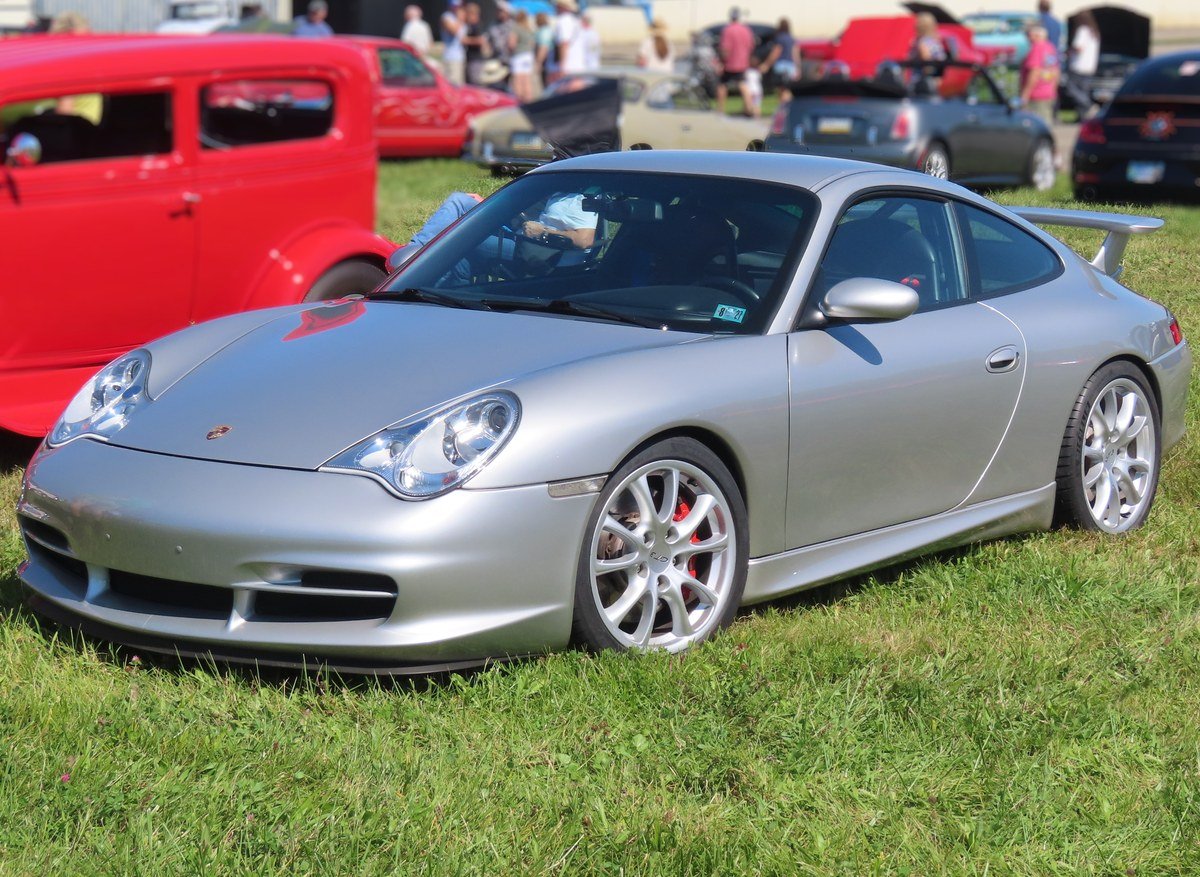

Editorial reference photograph, not BBE inventory. “2004 Porsche 911 GT3, front left, 08-29-2026.jpg” by MercurySable99, Wikimedia Commons, CC BY-SA 4.0. Photo source: MercurySable99; CC BY-SA 4.0. Resized to 1200 pixels wide and recompressed; no crop or content alteration. This photograph remains under CC BY-SA 4.0. No endorsement implied.

A used Porsche GT3 search can become confusing before the first viewing. The name spans different generations, markets and specifications, and photographs do not always make those distinctions obvious. The 996.2 GT3 deserves a precise brief of its own, especially for a US buyer who wants an early North American example rather than a car described loosely as an original GT3.
This is an evergreen identification guide, not new-model news. Big Boy Exotics helps source exotic cars across the United States. For this search, start with the generation, market specification and desired degree of originality. Those choices make the shortlist more meaningful than a broad request for any manual GT3. Share your car-sourcing brief.
Put the model in the right sequence
Porsche's US retrospective explains that the first 996 GT3 appeared in 1999, while the facelifted version introduced the GT3 to North America for the 2004 model year. The later car had 381 hp, a six-speed manual transmission, revised gearing and larger front brakes. Porsche also notes that carbon-ceramic brakes became an option. These historical details establish a baseline; they do not authenticate a car advertised for sale. Manufacturer source.
Ask the seller for the vehicle identification details, original market information and whatever factory specification records are available. Reconcile them with the title and service history. Do not let an RS-style visual treatment, replacement wheels or a later modification stand in for proof of the original model and equipment.
Separate original, changed and unknown
Create three short lists. The first should contain equipment confirmed by records. The second should identify documented changes, including who performed them and whether original parts remain. The third should hold items that are not yet verified. This approach is more useful than a single claim that a car is either completely original or tastefully modified.
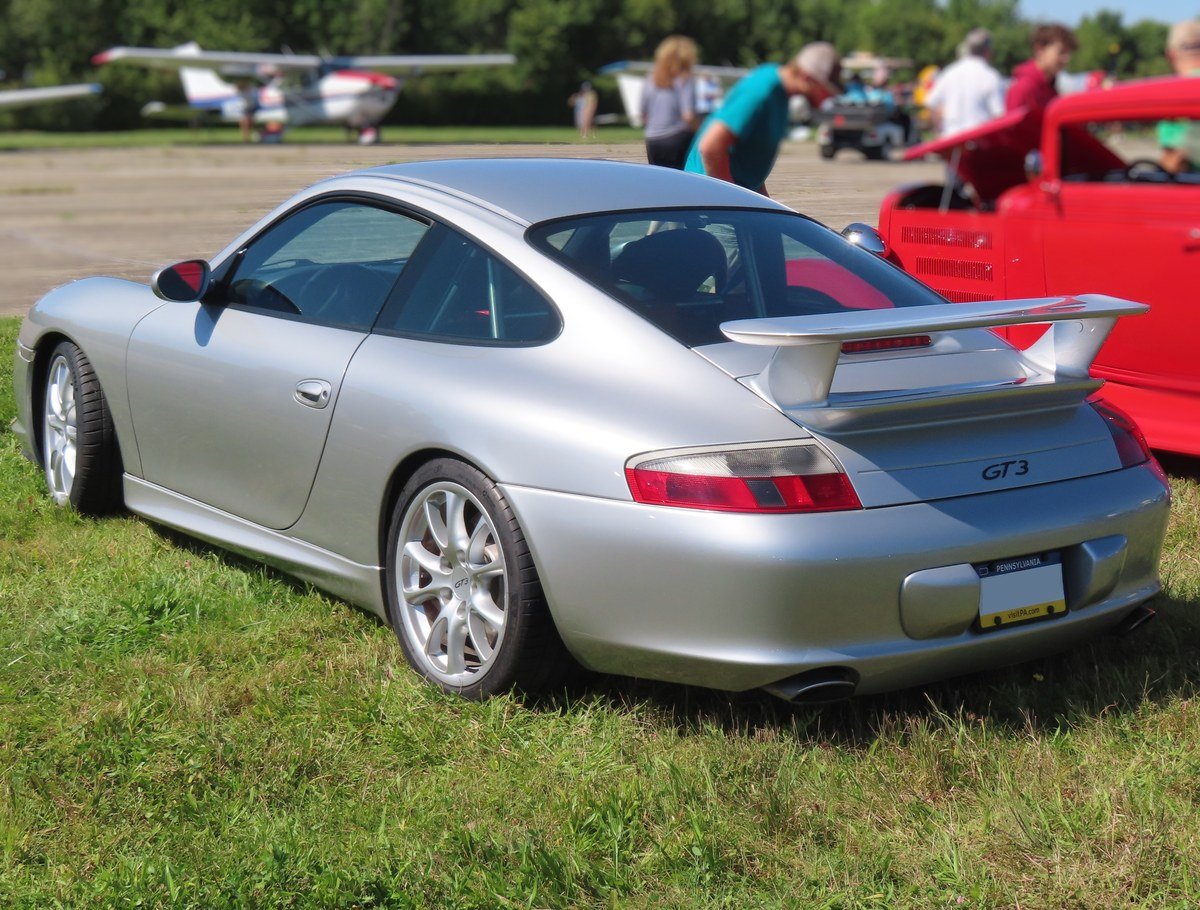
Editorial reference photograph, not BBE inventory. “2004 Porsche 911 GT3, rear left, 08-29-2026.jpg” by MercurySable99, Wikimedia Commons, CC BY-SA 4.0. Photo source: MercurySable99; CC BY-SA 4.0. Resized to 1200 pixels wide and recompressed; no crop or content alteration. This photograph remains under CC BY-SA 4.0. No endorsement implied.

A modification is not automatically a reason to reject the car. It does, however, change the questions. Ask why it was installed, whether related components were changed, and what documentation supports the work. If your preference is to return the car to its original configuration, obtain a practical assessment before assuming the process will be simple or inexpensive.
Read use through records, not stereotypes
A GT3 badge does not prove that a car was driven on a circuit, and low recorded mileage does not establish gentle treatment. Ask direct questions about use and compare the answers with invoices and inspection findings. If track use is disclosed, have the specialist explain which additional checks are appropriate for that specific car.
Arrange an independent inspection with a shop familiar with this generation. Agree beforehand on the mechanical assessment, diagnostic work and documentation review. Where a test cannot be performed, the report should say so. One clean photograph or one reassuring statement should not close an issue that requires measurement or specialist judgment.
Make the brake specification explicit
Because the model could be equipped differently, identify the brakes actually fitted rather than infer them from the model name. Ask the inspector to document condition and any replacement history. If a conversion is present, have its configuration and supporting records assessed. This is a buying question, not a claim that a particular brake type is inherently unsuitable.
Build the comparison around the differences you can verify. A car with documented original equipment, one retaining its removed factory parts and one with an unexplained conversion should not occupy the same line in your notes. Record the cost and practicality of your preferred end configuration before using advertised prices to choose between them.
A strong sourcing brief ends with priorities: US-market identity, preferred equipment, tolerance for modifications and intended use. Which matters more to you, a documented original configuration or a carefully understood car set up for your own driving? Start your US car search.