
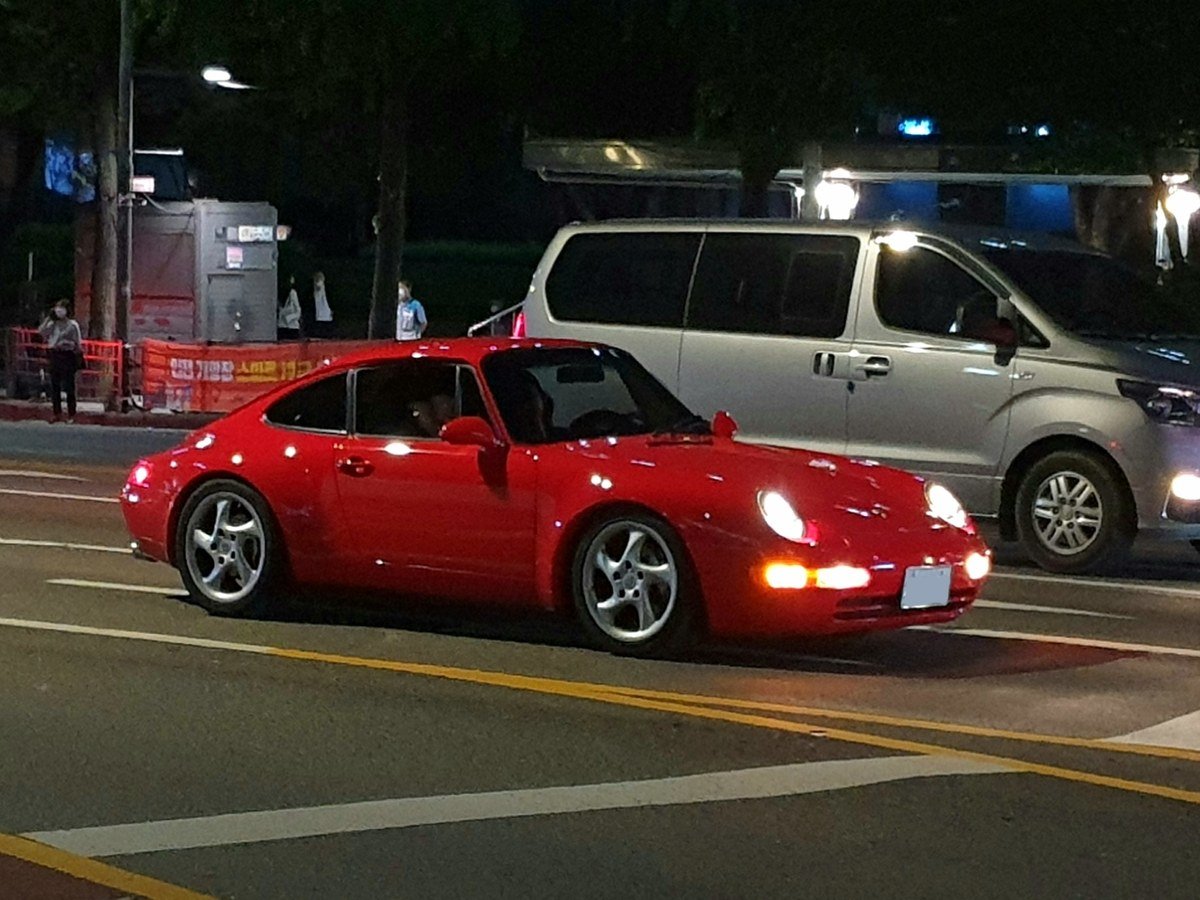

Editorial reference photograph, not BBE inventory. Porsche 993 Carrera 4 coupe, front three-quarter night view. Porsche 993 Carrera 4 red (1).jpg by Damian B Oh, CC BY-SA 4.0. Resized to maximum 1200 pixels and JPEG recompressed; no crop or content alteration. Photo remains under this license; no endorsement implied.

The number four on a Porsche 911 badge tells you which wheels can receive drive. It does not tell the whole story of how power reaches them. The 993-generation Carrera 4 used a different arrangement from the 964 before it, and it should not be described as though it had the electronically managed system of a much later 911.
For American enthusiasts comparing air-cooled cars, that distinction adds substance to the shortlist. Big Boy Exotics serves buyers across the United States; you can start a sourcing brief with a preferred generation and body style. This is an evergreen engineering guide, not a report of a new model or available inventory.
A simpler route to the front axle
Porsche’s historical account explains that the 993’s rear axle was driven directly, with a passive viscous coupling transferring some drive forward when the front and rear axle speeds differed. The company contrasts that arrangement with the preceding 964’s transfer case and controlled clutch system. It also identifies a rear differential lock and an automatic brake differential, or ABD, on the 993 all-wheel-drive model.
Think of these as two separate distribution questions: how much drive reaches the front axle, and what happens between the left and right rear wheels. A mechanism addressing the first question does not make the second disappear. That is why a description reduced to “all-wheel drive” leaves out much of the engineering.
What the brake differential contributes
Porsche describes ABD using wheel-speed information from the ABS sensors and braking a spinning rear wheel. This helps the opposite rear wheel receive useful drive when available grip differs from side to side. It is a different intervention from the viscous coupling’s response between axles. Both belong in an explanation of the complete system.
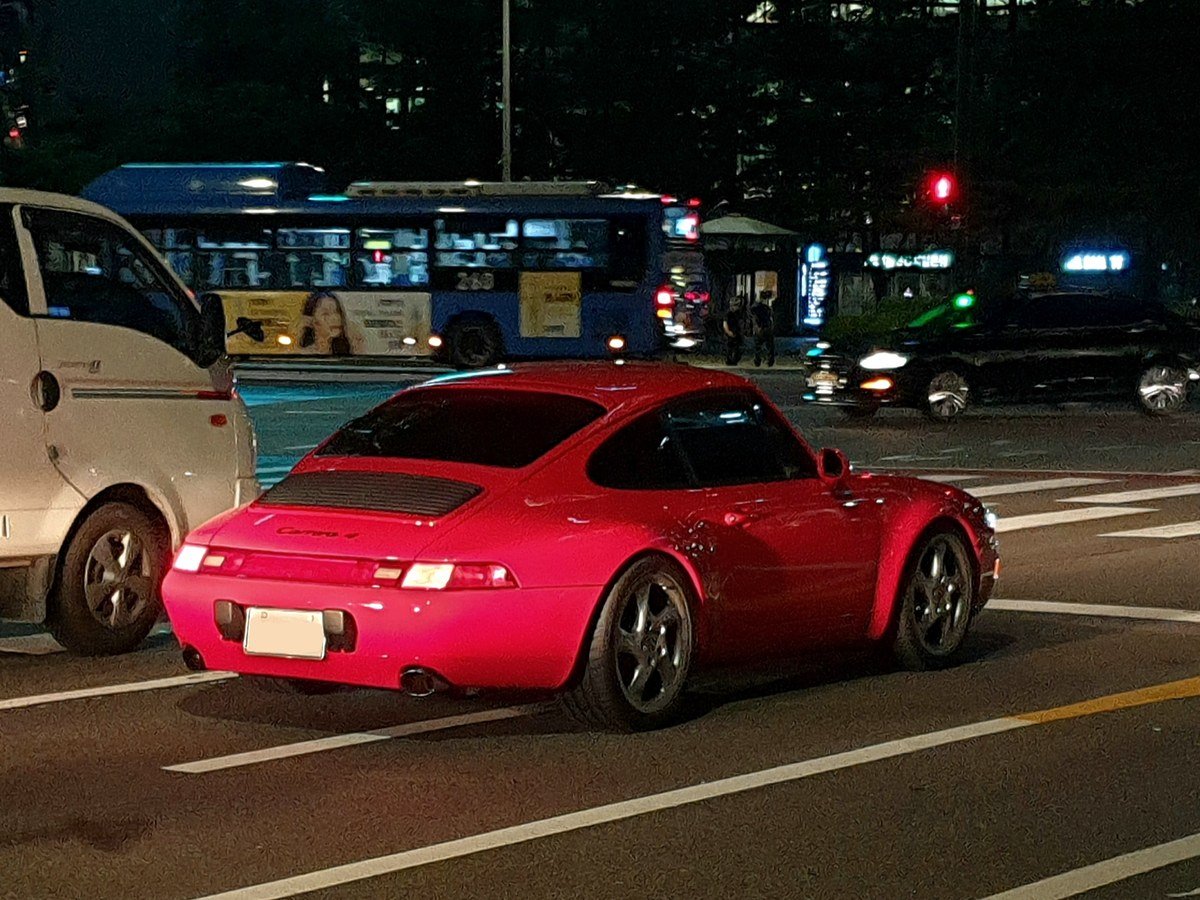
Editorial reference photograph, not BBE inventory. Porsche 993 Carrera 4 coupe, rear three-quarter night view. Porsche 993 Carrera 4 red (2).jpg by Damian B Oh, CC BY-SA 4.0. Resized to maximum 1200 pixels and JPEG recompressed; no crop or content alteration. Photo remains under this license; no endorsement implied.

A brake being applied in this context is not the same as the driver requesting an ordinary stop with the pedal. The control action is directed at a particular wheel to address unequal traction. Equally, the presence of that function should not be inflated into a claim that an older car has every stability-control capability offered by a modern one.
Keep the variants straight
Porsche’s 993 retrospective identifies the Carrera 4S as a naturally aspirated model using the wider Turbo body. It also distinguishes the Carrera S, which sent drive only to the rear wheels. Similar proportions therefore do not establish an identical drivetrain. An attractive rear photograph is a starting point for identification, not the end of it.
The retrospective also places the all-wheel-drive system within a broader redesign that included a new multi-link rear axle and a six-speed manual gearbox. Those changes matter when thinking about the generation as a whole. It would be too simplistic to attribute every difference in ride or handling to the extra driven axle.
What the mechanism does not promise
For a buyer, understanding the layout is more useful than seeking a dramatic demonstration of traction loss. There is no need to provoke wheelspin on a public road to appreciate how the system is arranged. Have a specialist establish the exact specification and evaluate its condition using appropriate procedures.
Treat driving impressions as observations of that individual car in those conditions. Tires, alignment, wear and previous alterations can complicate a comparison. A badge or a historical engineering description cannot establish the condition of a decades-old example today.
The rewarding part of the 993 Carrera 4 story is the combination of a recognizable rear-engine identity with a particular mechanical solution to distributing drive. Explore the BBE Journal for more context, or describe the air-cooled Porsche you want to find, including whether all-wheel drive is an essential part of your brief.