
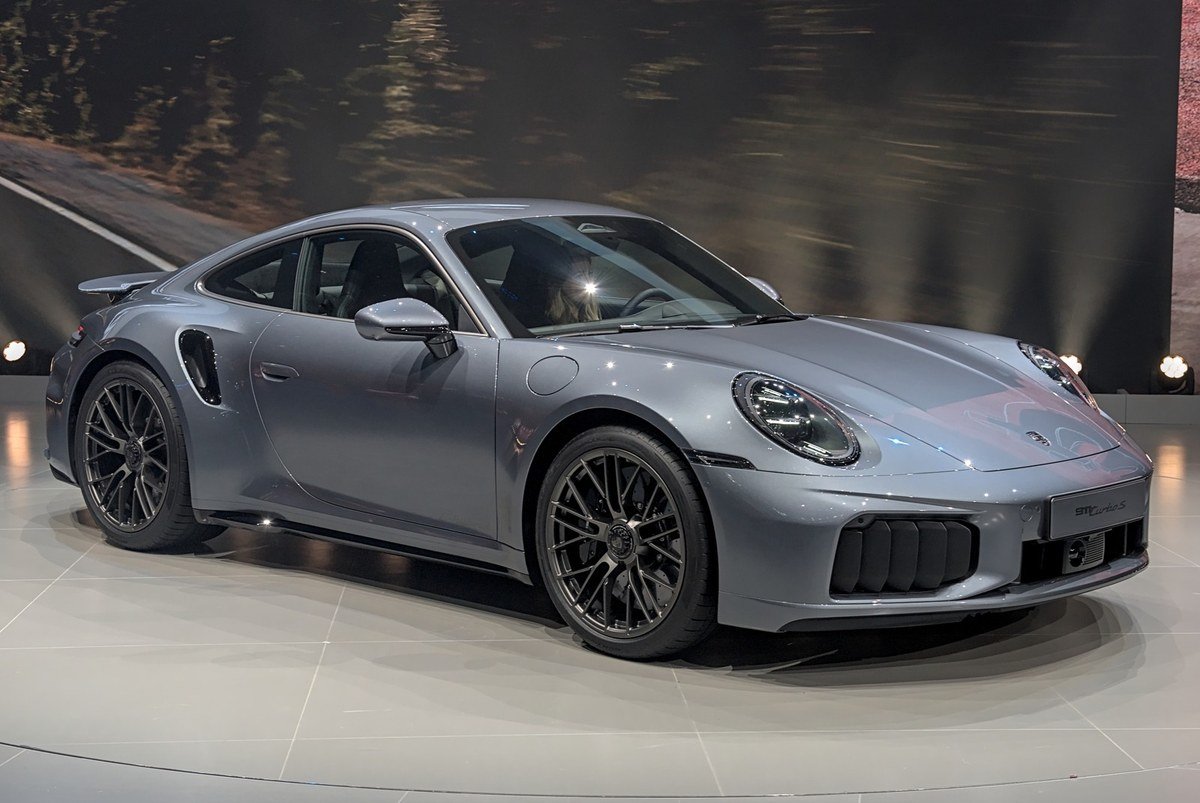

2025 IAA display example; European specification shown. Photograph by Alexander-93, CC BY-SA 4.0. Resized and JPEG recompressed; no additional crop or scene changes. Photo remains under this license; no endorsement implied.

The 992.2 Porsche 911 Turbo S coupe gives a familiar buying question a new dimension: how should a very fast road car deliver its performance? If this generation is on your shortlist, start a nationwide U.S. sourcing request with the exact generation and body style. Its most interesting change happens before the speedometer reaches a headline number.
Electric assistance reaches the turbochargers
Porsche unveiled the 2026-model Turbo S on September 7, 2025. Its U.S. announcement specifies a 3.6-liter flat-six, 701 hp of combined system output and 590 lb-ft of system torque. Porsche quotes 0–60 mph in 2.4 seconds for the coupe using launch control. Those are manufacturer figures, and this is an engineering review of that introduction rather than a fresh launch or a Big Boy Exotics road test. Porsche’s U.S. release establishes the specification.
The defining hardware is a pair of electric exhaust-gas turbochargers. An electric motor on each turbo shaft can accelerate the compressor directly. Porsche also uses those machines as generators: recovering energy from the spinning shafts regulates boost, with that electricity sent to the battery or the motor in the transmission. This arrangement dispenses with conventional wastegates and variable turbine geometry. Porsche describes the operation in its powertrain technical brief.
For a driver, the useful question is how consistently the car responds to a modest request for acceleration. A large peak output says little about that first moment between moving your foot and feeling the car gather speed. Electrifying the turbo shafts addresses that transition directly. It also changes what an informed demonstration should emphasize: predictable response through ordinary speed changes, rather than an attempt to reproduce a closed-course launch.
A compact energy system with several jobs
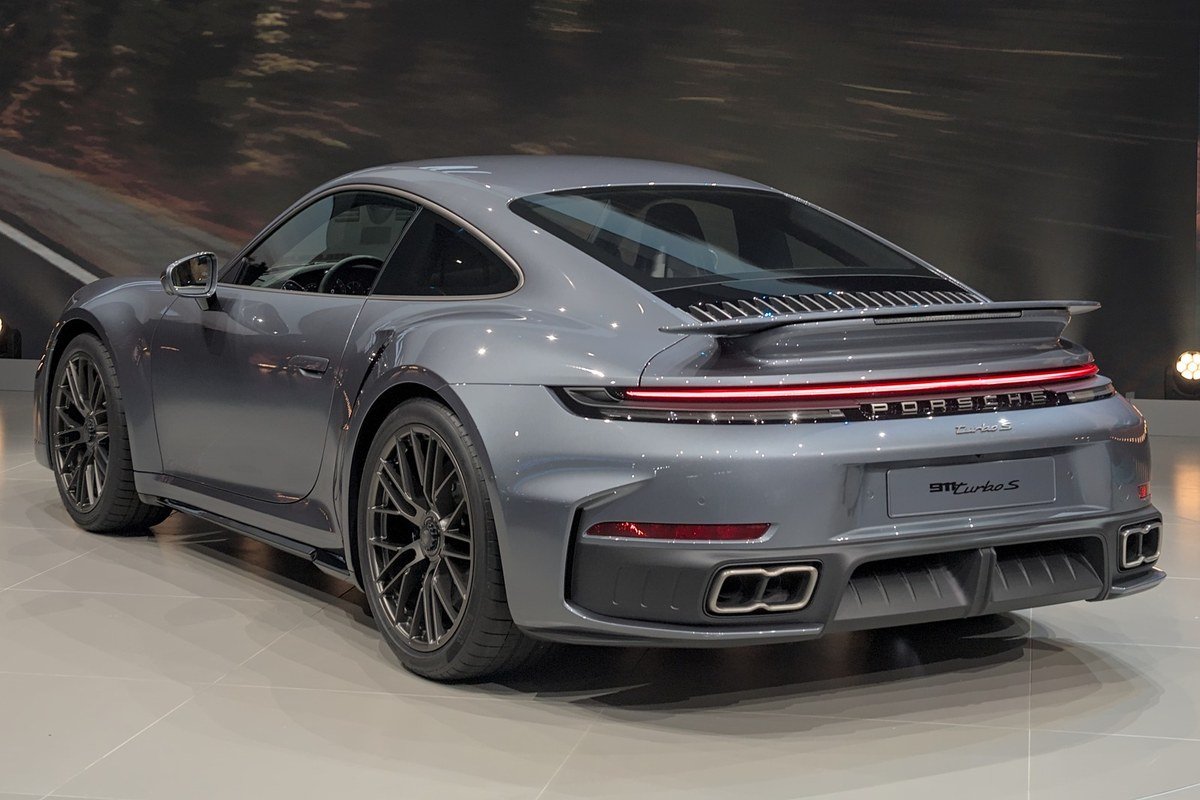
2025 IAA display example; European specification shown. Photograph by Alexander-93, CC BY-SA 4.0. Resized and JPEG recompressed; no additional crop or scene changes. Photo remains under this license; no endorsement implied.

The same technical brief identifies a 1.9-kWh gross-capacity, 400-volt battery mounted at the front and an electric motor integrated into the eight-speed PDK transmission. The motor assists propulsion and performs starter and generator functions. These details explain why a discussion centered on electric-only commuting would miss the principal engineering purpose. The energy system is designed around performance assistance and recovery.
The layout invites a more complete ownership conversation. Ask the servicing Porsche center to explain the high-voltage inspection requirements and the records available for the particular VIN. Have a qualified specialist assess the whole powertrain, including diagnostics and cooling-system condition. The presence of a small battery is not a reason to invent a replacement interval, predict a failure rate or treat an inspection as unnecessary.
Evaluate the response you will actually use
During an appropriate demonstration, pay attention to a gentle pull away, part-throttle shifts and smooth acceleration within the speed limit. Consider whether the combination feels intuitive to you in the driving mode you would use most often. Cabin comfort and the ability to place the car accurately in traffic deserve time too. A system that produces remarkable test figures still has to fit your own roads and habits.
For historical context, our 991.2 Turbo S Sport Response guide explores an earlier approach to making performance accessible. Keep that car’s specification separate from the newer hybrid coupe when comparing listings.
Build the search around the experience you want, then verify the car that promises it. Ask Big Boy Exotics to source your Porsche nationwide, with your preferred coupe specification, budget and documentation requirements clearly defined.