
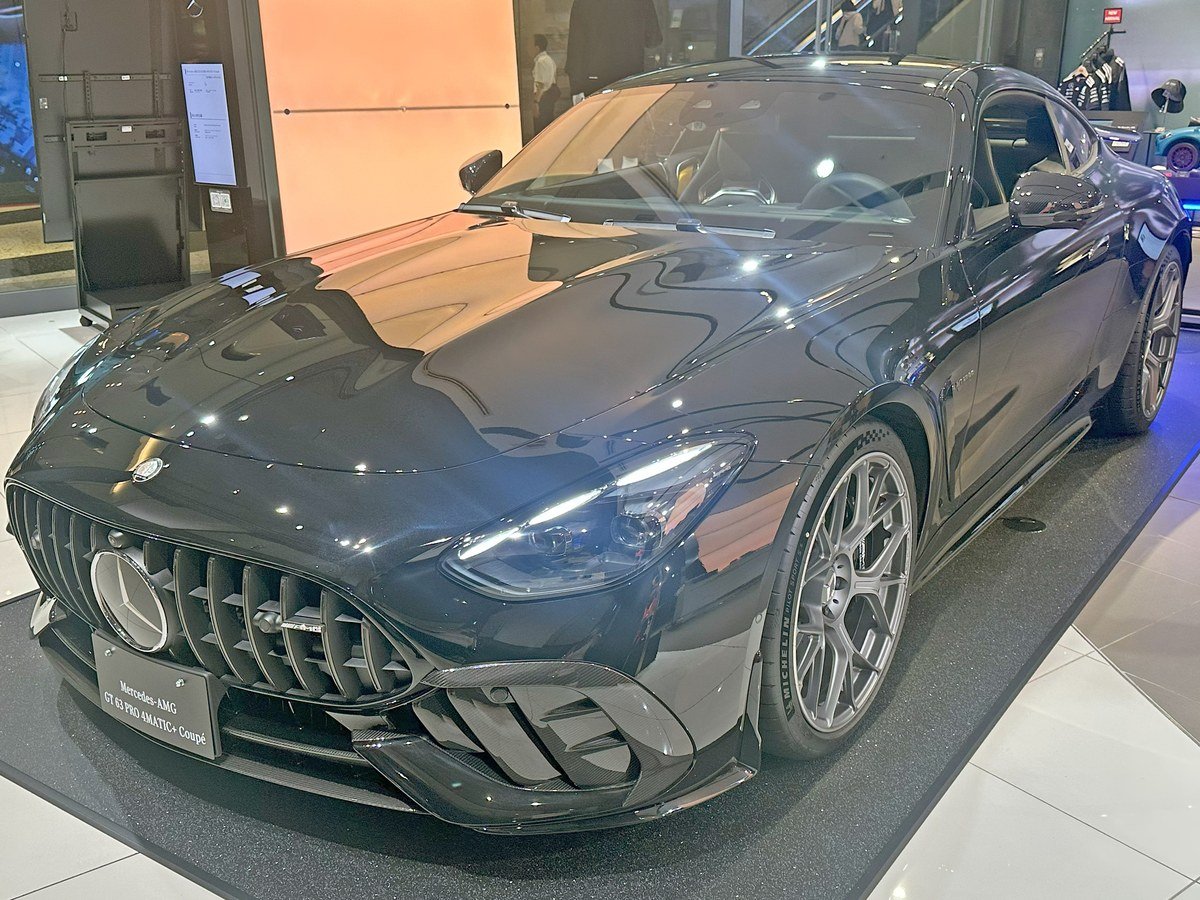

The Mercedes-AMG GT 63 PRO 4MATIC+ coupe on an indoor display in June 2025. Photograph by Tokumeigakarinoaoshima, CC0 1.0. Resized and JPEG recompressed; no additional crop or scene changes. Photo remains under this license; no endorsement implied.

The Mercedes-AMG GT 63 PRO makes cooling an unusually useful part of a buying conversation. Looking only at engine temperature would miss the scope of the engineering. The car’s July 11, 2024 US announcement described changes that extend through the drivetrain and into the airflow around the brakes.
This is an evergreen look at the 2025-model-year, second-generation two-door PRO, not a new launch. BBE serves US buyers, and a GT 63 PRO search brief should specify that exact version before equipment comparisons begin.
There is more than one heat path
In the Mercedes-Benz USA launch release, AMG describes reinforced high- and low-temperature cooling circuits and two additional radiators in the front wheel arches. It also identifies active cooling for the front and rear differentials and the all-wheel-drive transfer case, using electrically operated pumps to circulate coolant through their circuits.
The practical distinction is between producing a single burst of performance and managing the conditions around repeated use. The manufacturer’s cooling explanation addresses the latter. It does not, by itself, prove that every car will sustain a particular pace in every temperature, or that an individual example’s cooling system is in good condition.
It also explains why “the engine runs at the right temperature” is an incomplete inspection summary. Ask which systems the specialist evaluated and what evidence supports the assessment. One normal reading cannot stand in for a review of every circuit described in the car’s engineering brief.
Airflow is part of the cooling specification
The same US release describes revised underbody air vanes and brake cover plates intended to improve airflow to the brakes. It lists carbon-ceramic brakes as standard equipment. The cooling story therefore includes the route air takes around components as well as the circulation of coolant.
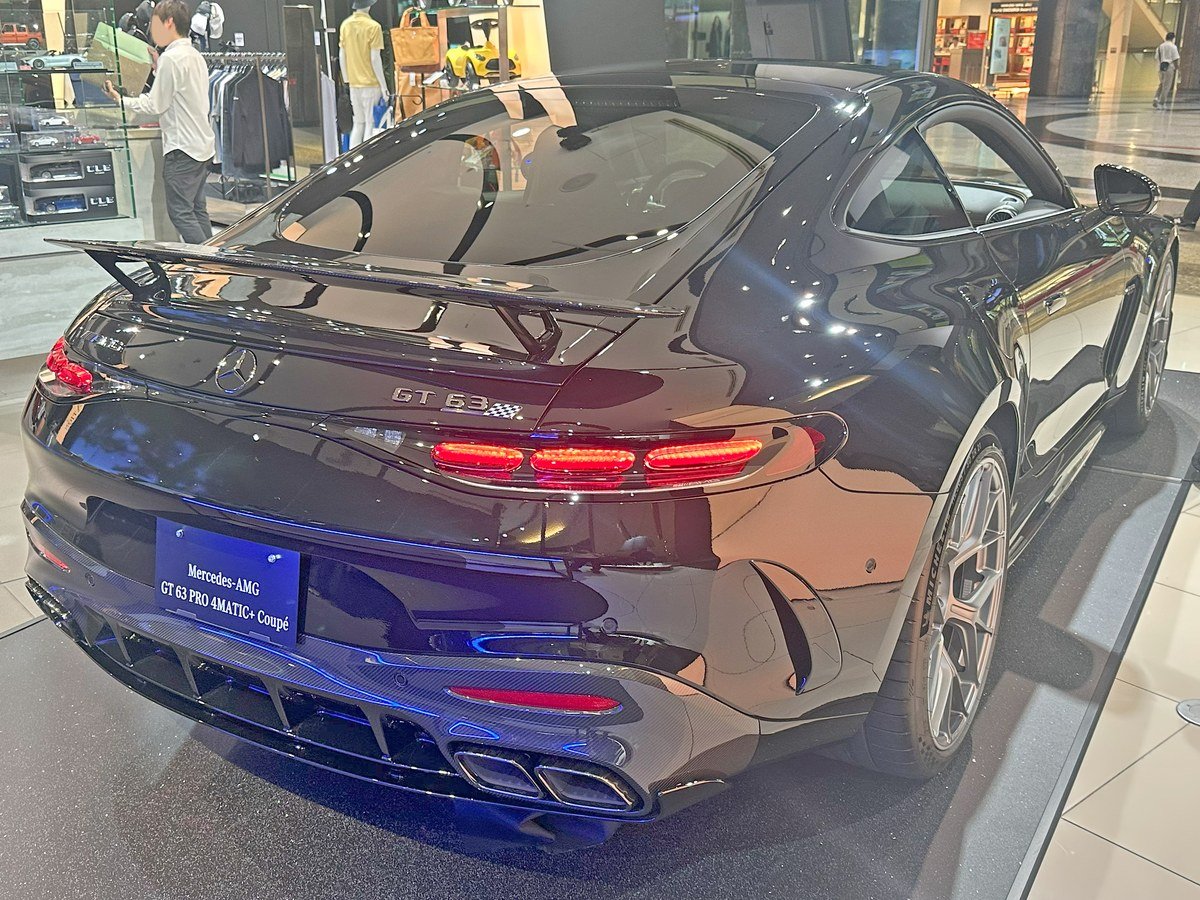
Rear view of the same apparent GT 63 PRO display car. Photograph by Tokumeigakarinoaoshima, CC0 1.0. Resized and JPEG recompressed; no additional crop or scene changes. Photo remains under this license; no endorsement implied.

That makes apparently minor body and underbody changes worth documenting. If parts have been removed, replaced or modified, have a qualified reviewer identify them and assess the implications against the correct PRO specification. A photograph of the front openings cannot establish the condition of the equipment behind them.
This is not a suggestion that the model has a known defect. It is a way to make an inspection relevant to the design. Ask for findings, limitations and any further checks needed, rather than converting an unfamiliar component into a predicted repair bill.
Match the assessment to the intended use
For a road-focused buyer, the useful evidence begins with service history, condition and a proper operating demonstration. A track-day plan adds questions about event preparation, support and the car’s documented history of use. The presence of additional cooling hardware does not answer those questions automatically.
A road demonstration should remain within normal, lawful driving. It is not a thermal endurance test. If your decision depends on circuit use, discuss the appropriate assessment with a specialist and the relevant event organizer instead of trying to recreate track loads during a viewing.
Our AMG GT 63 4MATIC+ buying guide covers the broader drivetrain and ownership comparison. The PRO’s cooling package deserves this separate, version-specific review; a familiar model-family name is not enough to establish the fitted equipment.
Put the engineering into the brief
Specify the PRO coupe, intended use and the documentation you want examined. BBE’s US buyer inquiry can record that scope. The goal is a clearer assessment of the actual car, without assuming current availability or promising a particular result on the road or circuit.