
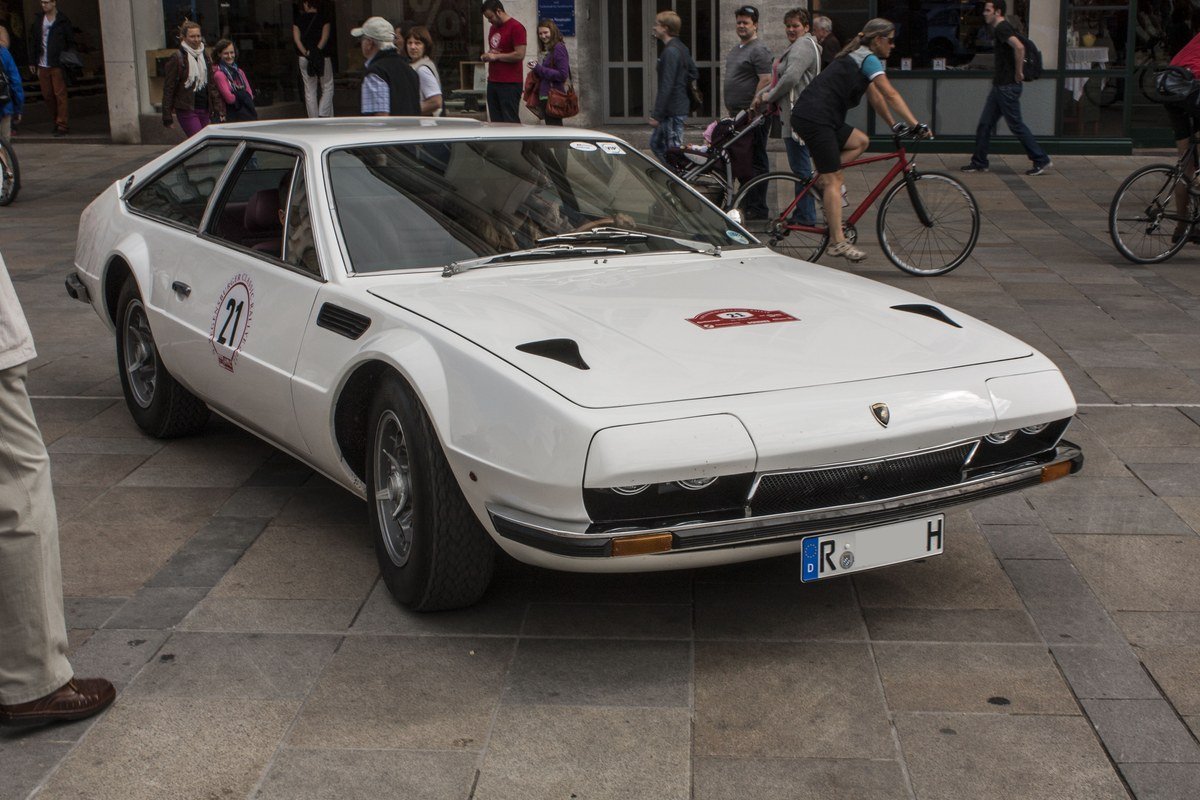

Editorial reference photograph, not BBE inventory. 1971 Lamborghini Jarama 400 GT, front three-quarter view. Lamborghini Jarama 400 GT Front.jpg by Robotriot, CC BY-SA 3.0. Resized to maximum 1200 pixels and JPEG recompressed; no crop or content alteration. Photo remains under this license; no endorsement implied.

Not every classic Lamborghini story begins behind the seats. The Jarama puts its V12 in front and offers a different starting point for a buyer who likes the marque but wants to understand its grand-touring history. For a US search, the first useful decision is more precise than “find a Jarama”: which version, and what evidence will establish it?
Big Boy Exotics serves buyers across the United States. A car-sourcing request can specify the version, condition priorities and records you expect. This guide is historical context, not a claim that BBE has a Jarama available.
Lamborghini dates the Jarama’s introduction to March 1970. Its history page describes a front-mounted four-liter V12 and a 2+2 layout, with Bertone design. The partly covered headlights and substantial rear side glass help give it an identity distinct from the company’s mid-engine cars. These are model characteristics, not evidence of any individual car’s authenticity.
The manufacturer’s November 11, 2020 anniversary material gives useful detail about the later GTS, introduced in 1972: a hood air intake, outlets behind the front wheels and changes to the dashboard, instruments, seats and wheels. These distinctions can help frame questions. They should not become a do-it-yourself authentication test based on a single exterior image.
For example, a photograph may show one visible feature clearly while leaving the cabin or chassis identification unreadable. A restoration may also need explaining in its own terms. Ask the seller which version the car is documented as, then request the records that support that answer. If the visual details and paperwork appear inconsistent, preserve the discrepancy for a qualified marque specialist rather than resolving it by intuition.
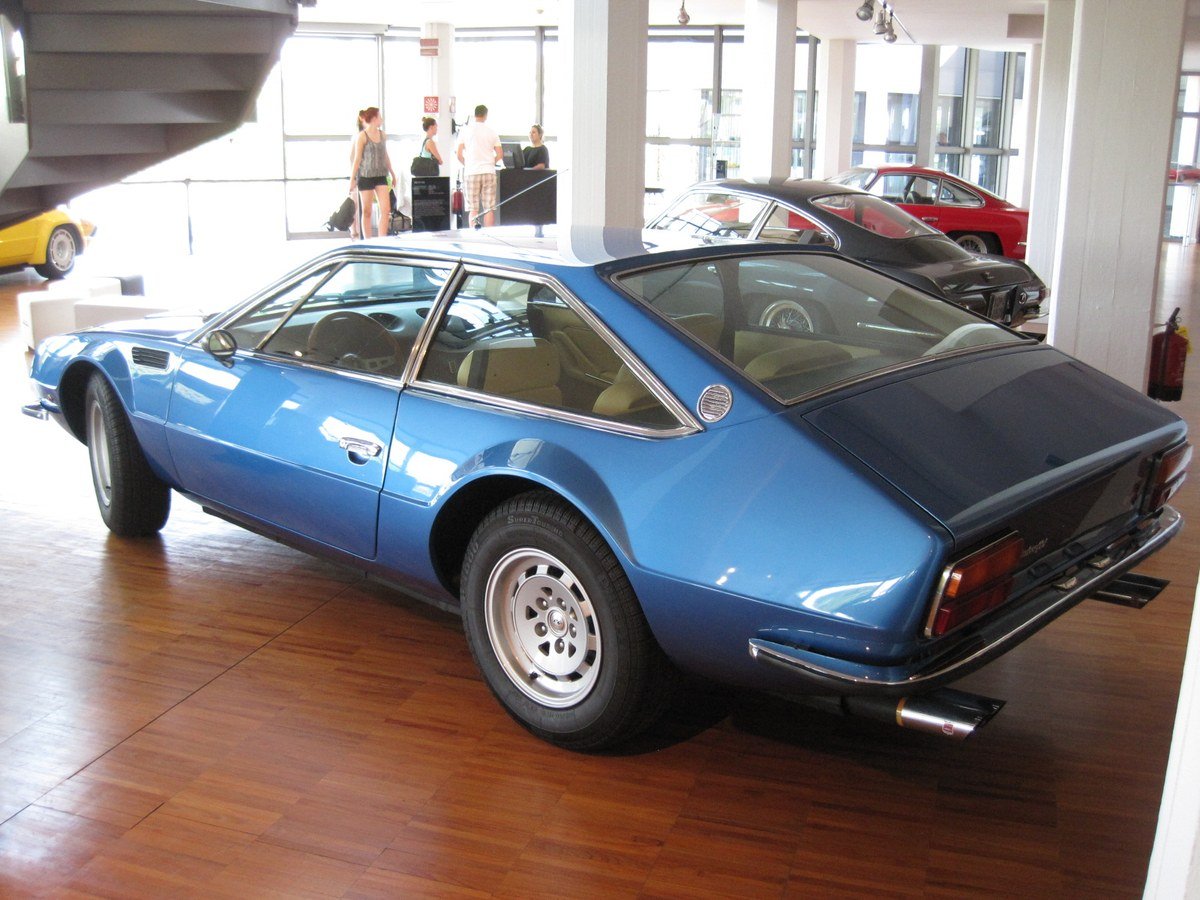
Editorial reference photograph, not BBE inventory. Lamborghini Jarama 400 GT, rear three-quarter museum view. Musée Lamborghini 0051.JPG by Arnaud 25, CC BY-SA 3.0. Resized to maximum 1200 pixels and JPEG recompressed; no crop or content alteration. Photo remains under this license; no endorsement implied.

There is another reason to be careful with easy reference tables. Lamborghini’s public history page and its anniversary release do not agree on every production total and date range. This guide deliberately avoids turning those conflicting figures into a definitive rarity claim. Buyers should be especially cautious when a sales description uses an unexplained production number as the main reason to pay more.
Build a search brief in two layers. The first is the non-negotiable identity: GT or GTS, the supporting chassis documentation and the evidence expected for the car’s history. The second is your intended use: how often you plan to drive, whether passenger space matters and what level of restoration or originality you want a specialist to assess. Those preferences are not the same as an inspection verdict.
For a candidate already in the United States, request the title and relevant history before assuming the paperwork is straightforward. For a car outside the country, do not treat its age, a seller’s reassurance or a foreign registration as a complete import plan. Obtain case-specific advice from the appropriate qualified professionals before making transport or purchase commitments. This article does not establish import eligibility.
Ask for an inspection report that separates observations from recommendations. The report should identify what was examined, what could not be checked and what additional evidence is needed. Restoration invoices and photographs can help explain work, but they do not eliminate the value of an independent assessment of the car as it stands today.
The Jarama is an interesting search because its identity rewards attention, not because every example deserves the same description. Keep the version, the documentation and your use case together. When you are ready to outline a US car search with BBE, those details make a much stronger starting point than a badge and a production statistic.