
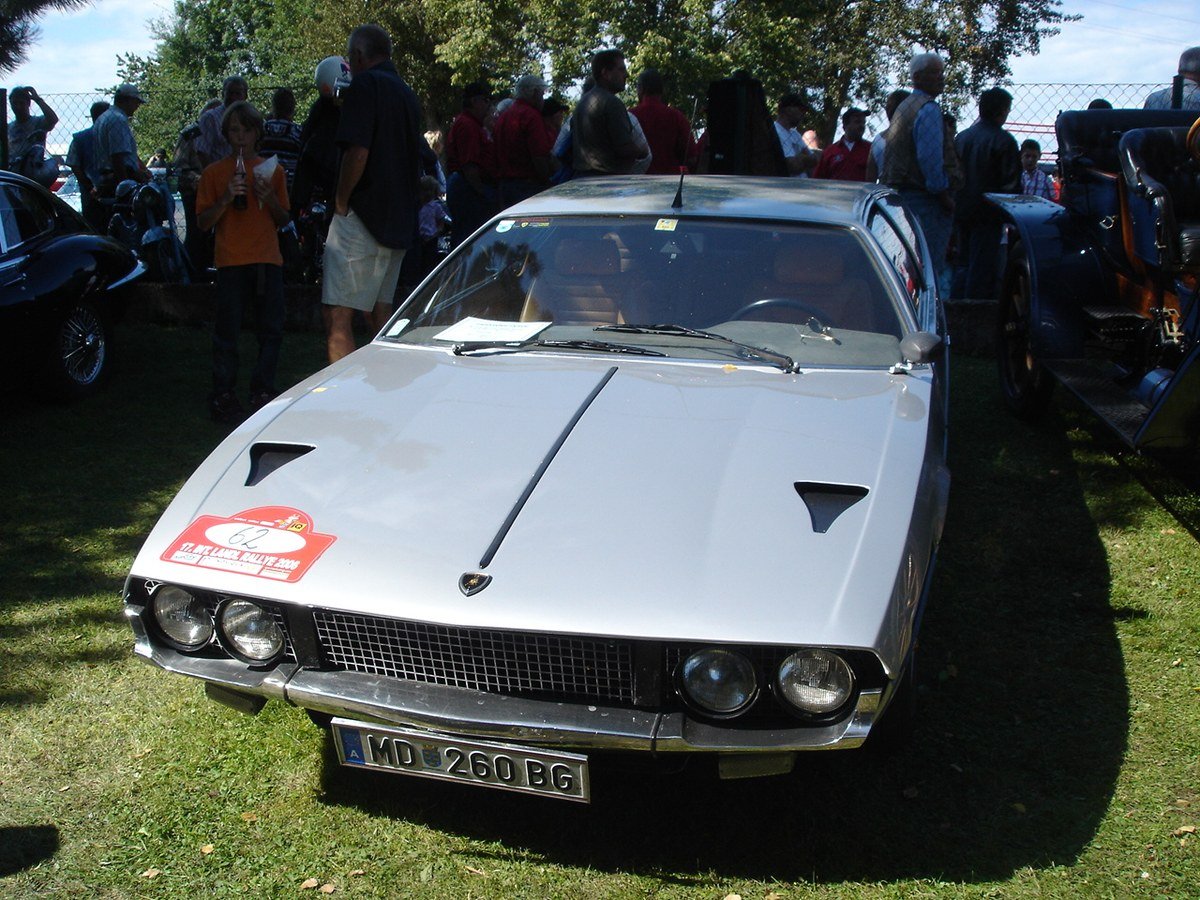

Editorial reference photograph, not BBE inventory. Lamborghini Espada, front view. Lamborghini Espada.jpg by JaayJay (original upload credited Michi1308), Public domain. Resized to maximum 1200 pixels and JPEG recompressed; no crop or content alteration. Photo remains under this license; no endorsement implied.

A four-seat Lamborghini invites a different kind of question. Instead of asking only how the car looks from the curb, ask who will sit in it, what they will bring and whether the layout suits the journeys you actually plan. The Espada makes that conversation especially interesting because passenger space was central to its original brief.
This is an evergreen ownership guide to a historic model, not a new-car announcement. Big Boy Exotics serves buyers across the United States. If an Espada is on your list, a classic Lamborghini sourcing brief should describe the people and trips the car needs to accommodate as clearly as the color you prefer.
Four seats were the point
Lamborghini’s official history says Ferruccio Lamborghini wanted a car that combined the marque’s performance expectations with room and comfort. The Espada debuted in 1968 with a four-liter V12 and Bertone-designed bodywork. Its brief included four passengers and their luggage, rather than treating the rear compartment as a styling afterthought.
The manufacturer describes three production series spanning 1968 through 1978. Its design account also highlights the unusual glass arrangement around the luggage compartment. Those details explain the concept, but neither a series label nor a factory design intention tells you how comfortable a particular buyer will feel in a particular surviving car.
Make the cabin assessment personal
If possible, sit in the car with the people who would normally travel with you. Set the front seat for the intended driver before assessing the rear. Check entry and exit, the space around knees and feet, and whether everyone can find a natural seated position. A photograph taken with an empty cabin cannot answer these questions.
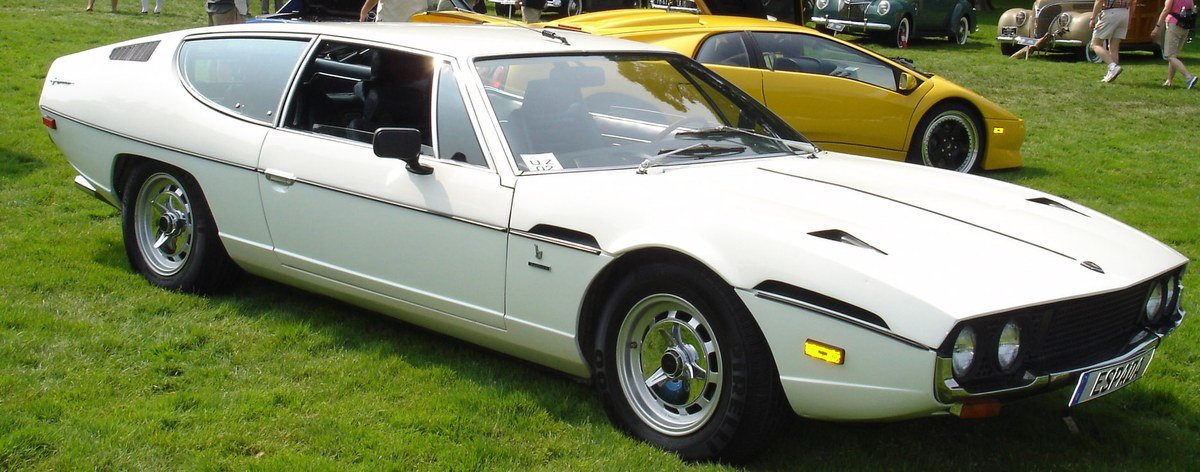
Editorial reference photograph, not BBE inventory. Lamborghini Espada, front three-quarter and side view. LamboEspada.jpg by Karrmann, CC BY-SA 3.0. Resized to maximum 1200 pixels and JPEG recompressed; no crop or content alteration. Photo remains under this license; no endorsement implied.

Bring the type of luggage you would genuinely use, or record its dimensions beforehand. Ask the seller to demonstrate the luggage opening and show how the space is arranged. Avoid making a touring plan around an assumed capacity figure or a photograph that hides the shape of the compartment. The useful result is a clear answer about your own bags, not a generic claim that the car is practical.
Comfort also depends on the individual example’s condition. During a permitted demonstration, ask for the cabin controls to be operated and note what works, what does not and what was not tested. Do not turn a brief visit into a substitute for a specialist inspection. Use it to identify the questions that deserve proper examination.
Keep the series and the evidence together
For each candidate, record the claimed series, identifying documentation, known modifications and the source supporting each statement. Ask the specialist to reconcile the car’s physical details with those records. A later component is not automatically a reason to reject a car, but its presence should be understood rather than discovered after a decision has been made.
For a US search, keep the car’s location and available ownership records visible in that same comparison. Do not assume that a photograph taken abroad establishes its present location or domestic availability. Ask for current information before arranging an inspection or making travel plans.
An Espada can be evaluated as a designed object and as a place to spend time. The strongest search brief respects both. Tell us who needs to fit, how you expect to use the car and which uncertainties you want resolved. Start an Espada sourcing conversation with Big Boy Exotics.
Primary source: Manufacturer history and engineering reference.