
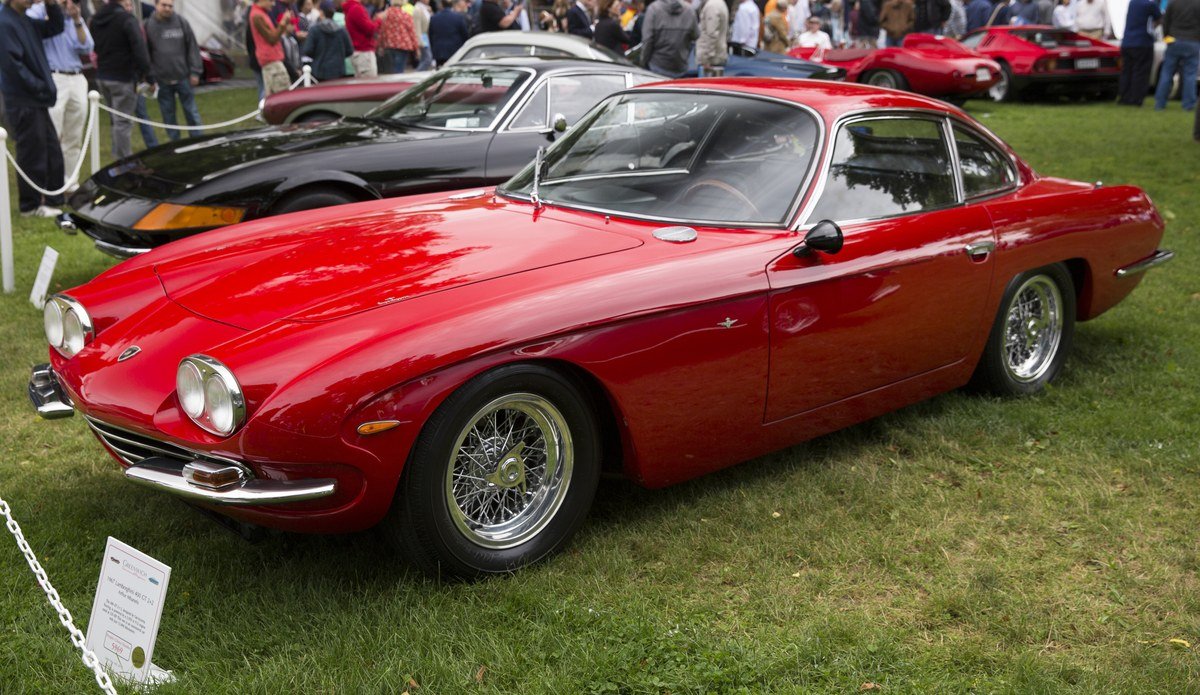

A 1967 Lamborghini 400 GT 2+2 at the 2018 Greenwich Concours d'Elegance, seen from the front-left. Photograph by Mr.choppers, CC BY-SA 3.0 Unported. Resized and JPEG recompressed; no additional crop or scene changes. Photo remains under this license; no endorsement implied.

Lamborghini’s October 21, 2026 tribute to the 400 GT marks sixty years since the model’s Geneva debut. For an American collector, the anniversary is a reason to revisit a different expression of the marque: a front-engined grand tourer designed around the journey as well as the engine. The 400 GT 2+2 deserves to be considered on those terms, rather than treated as a prelude to a more theatrical Lamborghini.
Big Boy Exotics serves buyers across the United States. If that quieter kind of occasion appeals, build a search brief around the driving you want to do, alongside the condition and history you expect.
The development was more than a larger engine
The anniversary account dates the introduction to March 1966. It describes a revised body with rear passenger accommodation, additional headroom and more luggage space, together with an in-house gearbox and revised rear suspension. The engine was a 3,929 cc V12, paired with a five-speed manual. These were changes to the whole touring proposition.
Lamborghini’s model history adds an important American connection: the United States quickly became a major market. It also identifies Touring’s body design, a raised rear roofline, a smaller rear window and steel bodywork replacing the earlier model’s aluminum. Those details explain why a familiar-looking shape merits careful study.
Choose the kind of history you want to own
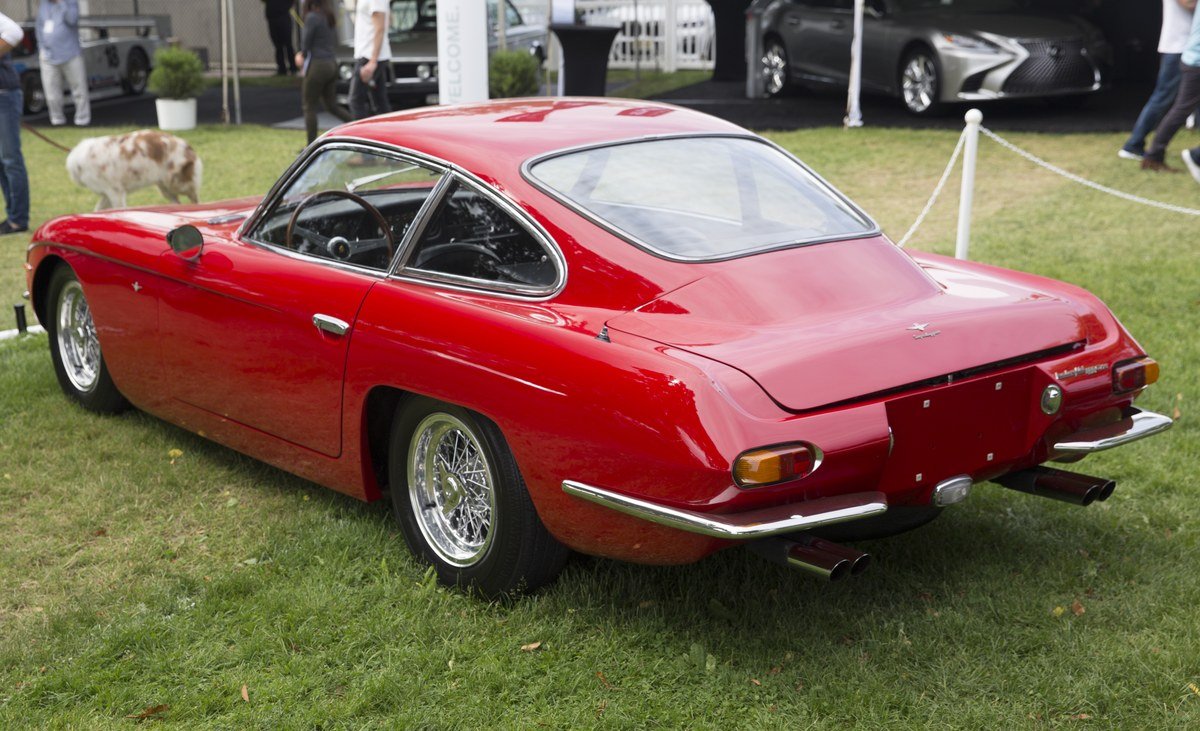
The same 1967 Lamborghini 400 GT 2+2, photographed from the rear-left at Greenwich in 2018. Photograph by Mr.choppers, CC BY-SA 3.0 Unported. Resized and JPEG recompressed; no additional crop or scene changes. Photo remains under this license; no endorsement implied.

For a buyer today, the useful distinction is between an appealing presentation and an understood car. A beautifully retrimmed cabin can be desirable, but it answers a different question from a cabin whose materials and configuration are documented from new. Decide whether your priority is preservation, a carefully restored example, or a car prepared for regular use. None should be judged solely by how fresh it appears in photographs.
Ask for a chronological record rather than a pile of invoices. Separate body restoration, engine work, gearbox work and subsequent maintenance. A restoration date alone does not tell you how much the car has been driven since, what was retained, or which jobs remain. Have the specialist explain any gaps in that story without filling them with assumptions.
The body deserves its own inspection plan. Request access to the underside and the supporting restoration photographs, where available. Paint quality and panel alignment are useful observations, but ask an experienced inspector to assess the structure and earlier repairs. This is a reason for a model-informed inspection, not a claim that every example has the same weakness.
Make the proposed journey concrete
A touring brief should describe actual use. Will the car make local morning drives, attend events several states away, or travel mainly by enclosed transport? Sit in it wearing the shoes you drive in, try the controls, and bring a realistic luggage sample. Treat the rear accommodation as something to assess personally rather than a promise inferred from the 2+2 designation.
For a US purchase, request the title history and any import documentation relevant to that particular car. Keep identity, condition and usability as separate questions until the evidence connects them. An evocative period story cannot resolve a discrepancy in the paperwork.
The anniversary makes the 400 GT 2+2 worth another look. A satisfying purchase comes from matching that history to a car you understand and a journey you genuinely want to make. To begin a US search, tell BBE how you plan to use your 400 GT 2+2.