

Big Boy Exotics serves exotic-car buyers across the United States. Tell us about your car search.
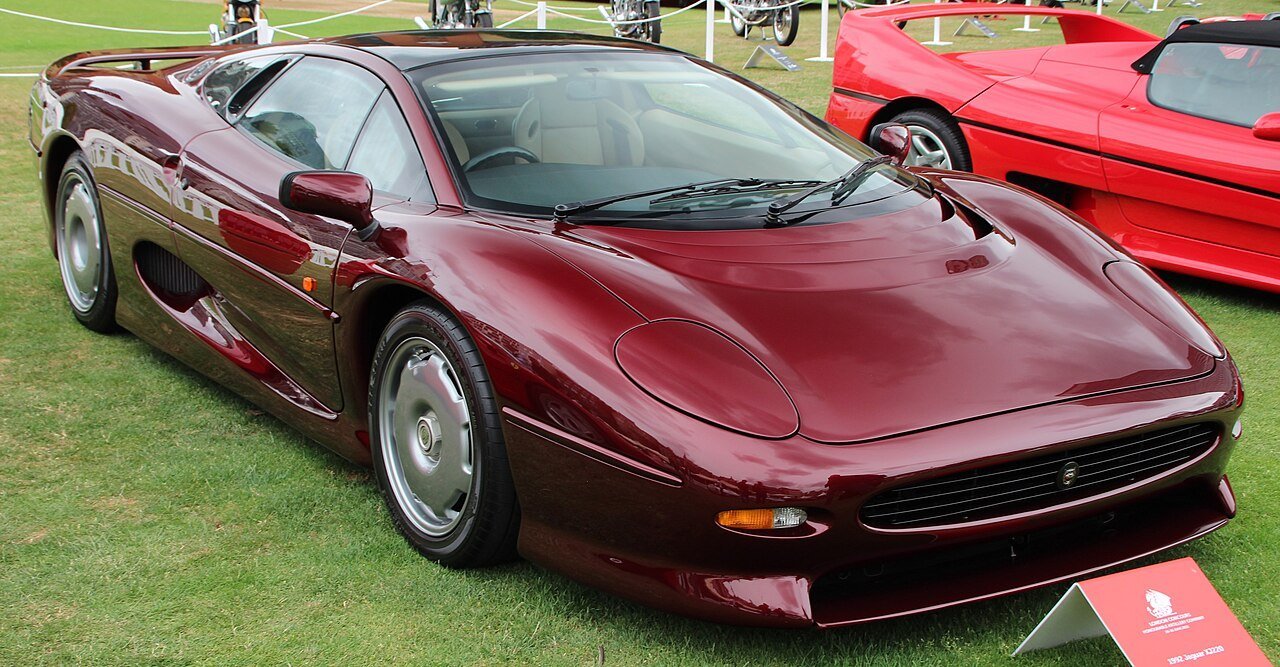
Cover: 1992 Jaguar XJ220 LC22.jpg, MrWalkr; CC BY-SA 4.0. Wikimedia resize; otherwise unchanged. Compact-delivery image resized and JPEG-compressed; no cropping or content edits.

The Jaguar XJ220 is often introduced through the engine it did not receive. Its 1988 concept had a V12 and four-wheel drive; the production car used a twin-turbo V6 and rear-wheel drive. That change is important history, but it can also distract from the machine a collector can actually own.
For a US buyer, a more rewarding starting point is the production design itself. The long aluminum-bodied coupe combines a compact forced-induction engine, a manual transmission and an ambitious structure. Its identity becomes clearer when those decisions are considered together.
Separate the experiment from the road car
The Jaguar Daimler Heritage Trust traces the original project to Jim Randle and the informal team known as the Saturday Club. The concept appeared at the British International Motor Show in October 1988. Public enthusiasm prompted a feasibility study, and production approval followed in late 1989.
The Trust describes the production car as using a TWR V6 and rear-wheel drive. Those are foundational differences, rather than small specification changes. A concept can demonstrate an ambition before the engineering and manufacturing plan for customer cars is settled.
Recognizing that sequence changes the collecting question. An owner is acquiring a particular expression of the project, with its own mechanical character and history. Measuring it only against an earlier show-car specification leaves much of that character unexplored.
The production powertrain has a clear identity
Jaguar's January 2012 technical retrospective specifies a 3.5-liter twin-turbo V6, a five-speed gearbox and an AP Racing twin-plate clutch. It quotes 475 lb-ft of torque. Drive goes to the rear wheels.
That layout places substantial responsibility with the driver's choice of gear and use of the accelerator. A modern dual-clutch supercar can conceal much of the decision-making between pedal input and acceleration. A manual turbocharged car invites the driver to participate more deliberately in that process.
This is a useful reason to approach familiarization patiently. Allow a specialist to establish that the car is ready, learn the controls and build experience progressively. The historical performance story provides context; it is not an instruction to reproduce a high-speed test.
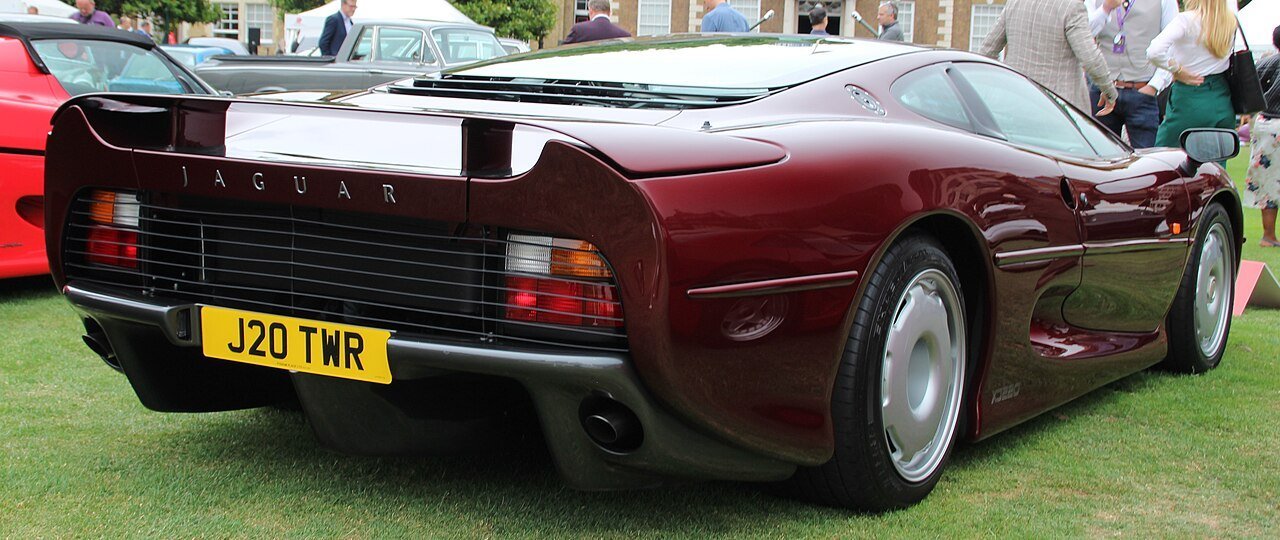
Photo: 1992 Jaguar XJ220 Rear LC22.jpg, MrWalkr; CC BY-SA 4.0. Wikimedia resize; otherwise unchanged. Compact-delivery image resized and JPEG-compressed; no cropping or content edits.

Structure was part of the ambition
Jaguar also identifies aluminum-honeycomb construction and quotes a weight of 1,470 kg, approximately 3,241 pounds. That construction belongs in any account of the car's engineering alongside the engine change.
Low mass influences every demand placed on a sports car: acceleration, deceleration and directional changes. The design challenge is to achieve an appropriate structure while retaining the body shape, interior and mechanical packaging the project requires. The XJ220 is interesting precisely because its performance cannot be reduced to cylinder count.
There is also a direct American connection. Jaguar records extensive tire and high-speed development at Fort Stockton, Texas, in 1991. In that testing, Andy Wallace reached 213 mph in a pre-production example. Keep the car, configuration and circumstances attached to such figures when comparing historical accounts.
Buy the documented example
For a US collection, establish the identity and history of the particular chassis before discussing rarity or value. A production road car, development vehicle and competition-derived variant carry different stories. Photos of one should never stand in for another.
Use current, specialist advice for the car's legal status, service support and intended use, especially if it is being considered overseas. Historic retail figures in pounds are poor substitutes for an itemized present-day USD acquisition and recommissioning budget.
The XJ220 rewards a buyer willing to look past a familiar controversy. Its V6, manual driveline and advanced structure form a coherent production car, and understanding that car is the foundation of an informed search.
From the Journal
Jaguar F-Type R AWD: Why the 2016 Model-Year Boundary Matters
Looking for a particular exotic car? Start your private search with Big Boy Exotics or send your car-sourcing brief to info@bigboyexotics.com.