


Editorial reference photograph, not BBE inventory. Ferrari Purosangue, front three-quarter view. Ferrari Purosangue DSC 7777.jpg by Alexander Migl, CC BY-SA 4.0. Resized to maximum 1200 pixels and JPEG recompressed; no crop or content alteration. Photo remains under this license; no endorsement implied.

Start with the way it moves
The Ferrari Purosangue’s V12 is easy to put at the center of a shopping list. Its suspension deserves equal attention. Ferrari introduced a system that can actively apply force through its dampers, rather than merely change how strongly they resist movement. For a US buyer, that makes a thoughtful road test more useful than a quick demonstration around a smooth dealership block.
This is an evergreen explanation of the original Purosangue architecture, not a newly announced model or a claim about every later package. Big Boy Exotics serves buyers across the United States; a sourcing brief can specify the exact configuration and intended roads before individual cars are compared.
What the hardware changes
Ferrari’s technical material describes Multimatic True Active Spool Valve technology combining a hydraulic damper and an electric motor. The 48-volt actuator can add force along the damper’s motion. Corner sensors and the vehicle’s control systems help coordinate the response. In plain language, the system has another tool for managing the body and wheels beyond changing damping resistance.
Ferrari says the architecture controls roll and pitch while addressing road irregularities. The original technical description also discusses how roll stiffness can be distributed continuously. Those are manufacturer engineering claims, not a promise that any used example will feel faultless or that every pavement disturbance disappears. Tire specification, condition and the condition of the individual vehicle still belong in the evaluation.
Design a realistic test route
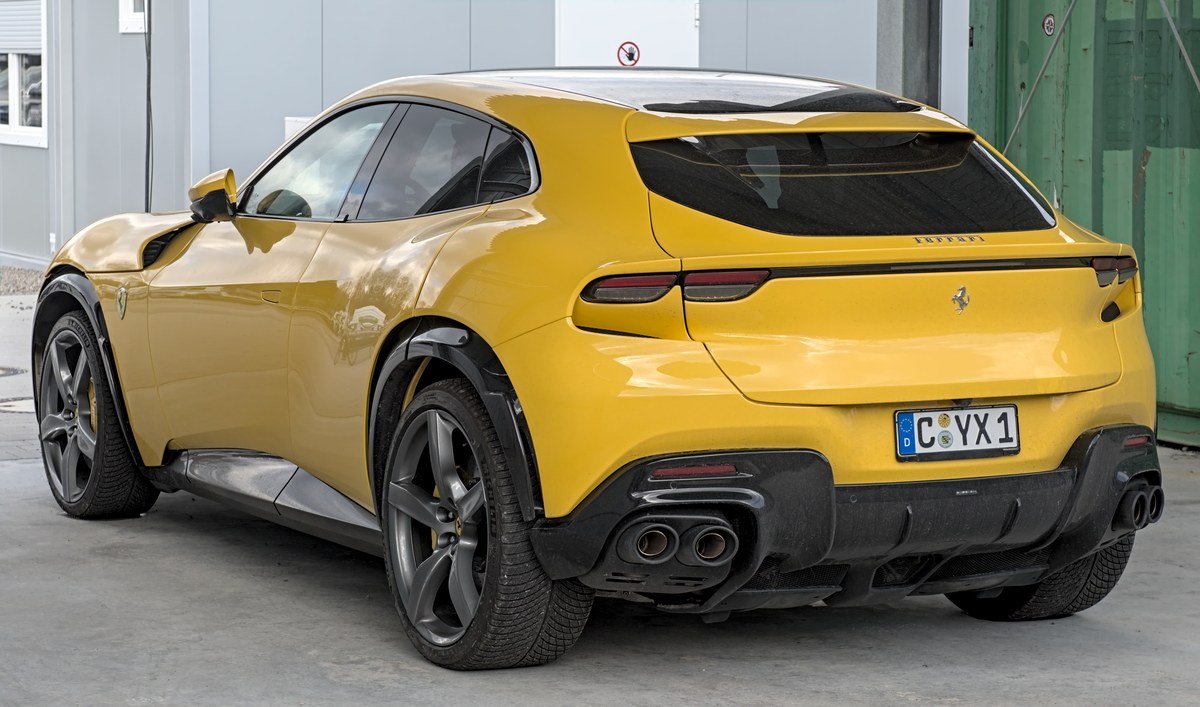
Editorial reference photograph, not BBE inventory. Ferrari Purosangue, rear three-quarter view. Ferrari Purosangue DSC 7775.jpg by Alexander Migl, CC BY-SA 4.0. Resized to maximum 1200 pixels and JPEG recompressed; no crop or content alteration. Photo remains under this license; no endorsement implied.

Choose a legal route that resembles the car’s actual future life: ordinary city pavement, a familiar freeway section and gentle changes of direction. Ask the seller to explain the permitted controls before setting off. A technician should investigate warning messages or abnormal behavior; a prospective buyer should not attempt aggressive maneuvers to prove the system works.
Pay attention from more than one seat. Ferrari designed the Purosangue with four individual seats and rear-hinged rear doors. A front-seat impression does not tell you whether a regular rear passenger likes the ride, entry or seating position. Bring the people and luggage that matter, where practical, and test everyday fit without turning the appointment into a performance exercise.
Keep observations specific. Record which road surface produced a concern, which settings were used and whether the car was cold or already driven. “It felt strange” is difficult for a specialist to investigate. A repeatable observation gives the inspecting workshop something concrete to assess. This is a screening method, not a substitute for diagnostic work.
Ask for records, not assurances
Request the factory specification and records for suspension, wheel, tire and alignment work. If a car has been lowered, fitted with different wheels or modified electronically, ask a qualified Ferrari specialist to explain the changes and their implications for this particular system. Do not assume that an attractive stance is factory-correct or that every modification is harmful; establish what was changed and why.
An independent inspection should be scoped with the workshop before purchase. Ask which electronic checks and mechanical observations it can perform, what it cannot verify and which follow-up work would require additional authorization. Avoid treating a clean dashboard during one short drive as a complete health report.
The Purosangue’s appeal includes how it accommodates ordinary travel, not only how it accelerates. Build a BBE search around specification, documented condition and daily use. A carefully chosen route and a clear inspection brief help turn impressive engineering into a more informed buying decision.