
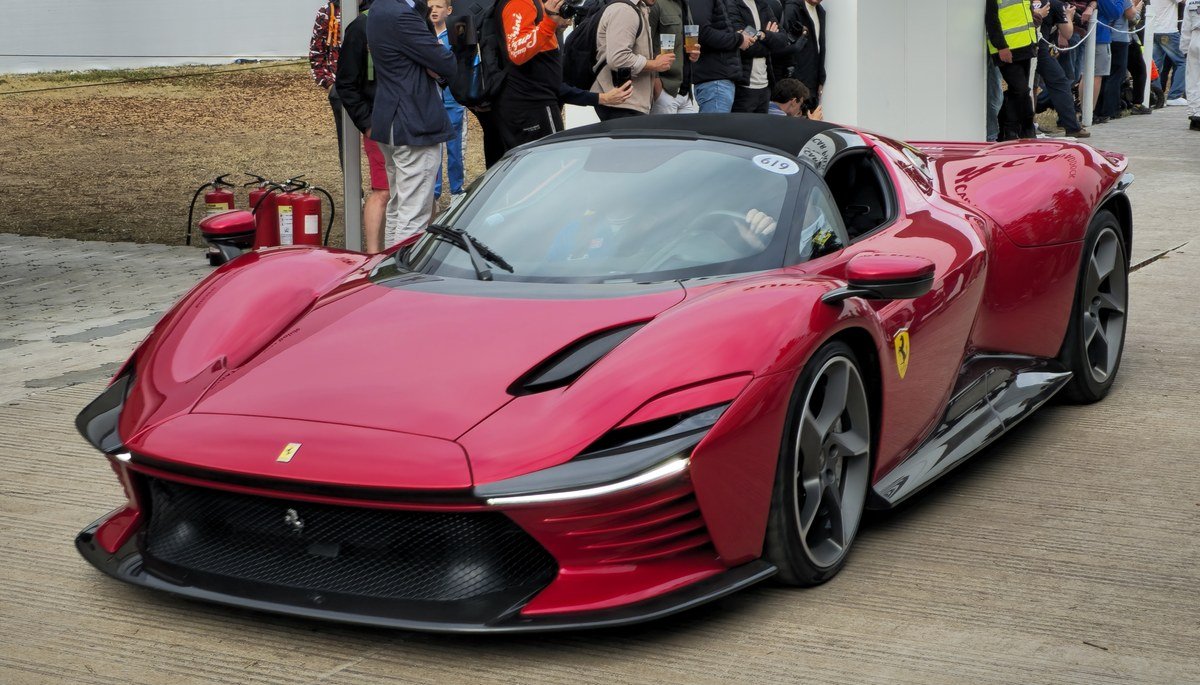

Editorial reference photograph, not BBE inventory. Ferrari Daytona SP3, front three-quarter view at Goodwood. Ferrari Daytona SP3.jpg by Calreyn88, CC BY-SA 4.0. Resized to maximum 1200 pixels and JPEG recompressed; no crop or content alteration. Photo remains under this license; no endorsement implied.

The seat changes the conversation
The Ferrari Daytona SP3 asks a buyer to think differently about the cockpit. Ferrari’s original technical release describes the seat as an integral part of the composite chassis. Ferrari pairs that fixed seating arrangement with an adjustable pedal box. Physical fit therefore depends on how this particular layout accommodates the driver, not on the familiar process of sliding a conventional seat backward.
This guide concerns the production Daytona SP3, not a newly launched edition or an advertised car. Big Boy Exotics serves buyers across the United States. Include driver fit and intended use in a Daytona SP3 sourcing brief alongside colors and documentation.
A structure with a specific purpose
Ferrari describes a chassis built from composite materials and a cockpit layout influenced by competition cars. The purpose is not simply to display visible carbon fiber. The structure, seating relationship and packaging form a connected design. A buyer viewing exterior photographs cannot judge whether that relationship works comfortably for their body.
The same original release emphasizes passive aerodynamic solutions, including channels that extract air from beneath the car. The design therefore rewards careful inspection of the lower body as well as the painted surfaces. These are descriptions of the factory concept, not evidence that any particular car has been damaged or that a cosmetic mark proves a structural problem.
Treat the appointment as a fit session
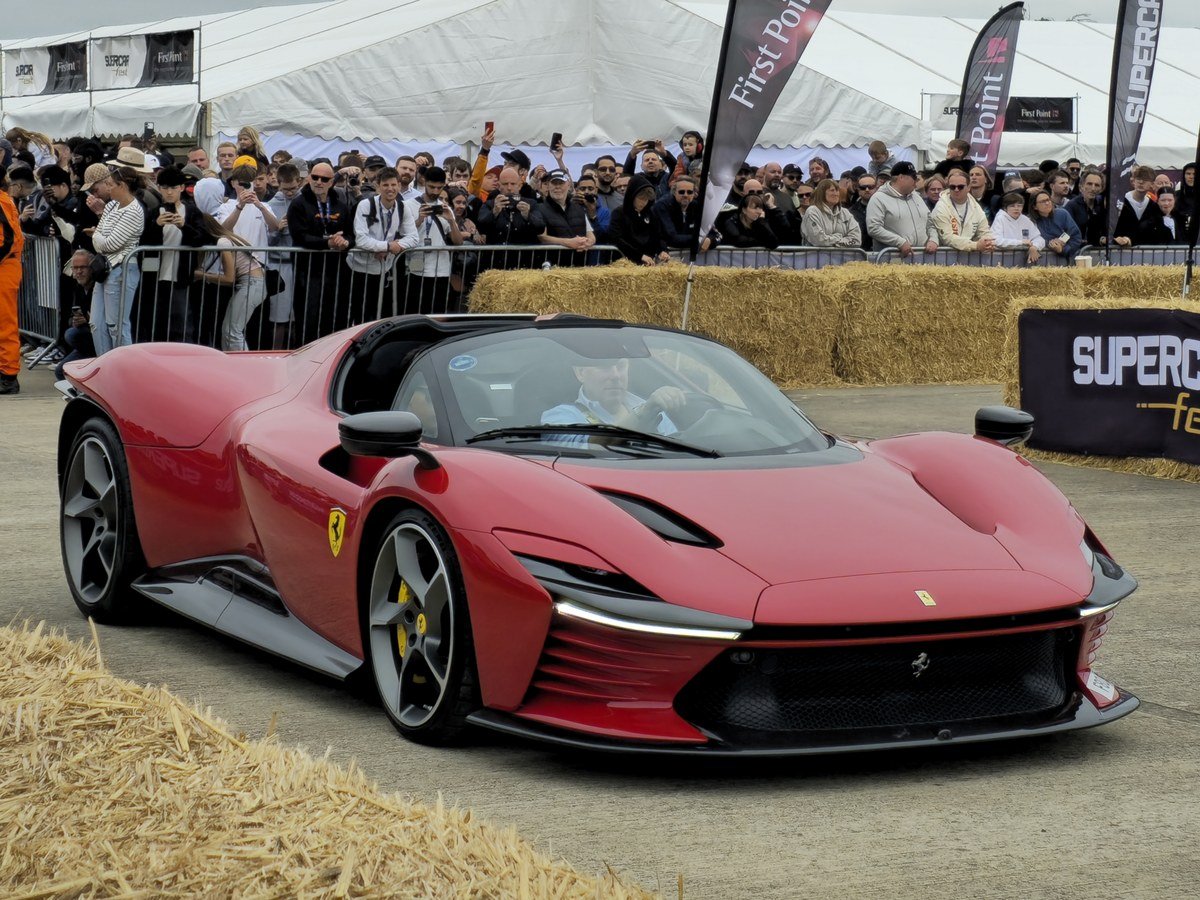
Editorial reference photograph, not BBE inventory. Ferrari Daytona SP3 with roof panel removed, front three-quarter view. Ferrari Daytona SP3 sf25.jpg by Calreyn88, CC BY 4.0. Resized to maximum 1200 pixels and JPEG recompressed; no crop or content alteration. Photo remains under this license; no endorsement implied.

Arrange enough time to enter and leave the actual car, settle into the driving position and have a knowledgeable representative explain its adjustment provisions. Wear the type of footwear normally used for driving. Check visibility, reach to controls and the relationship between legs, steering wheel and pedals. Do not guess how an unfamiliar adjustment works or force a mechanism.
If the car will be shared, each regular driver should assess it. A brief stationary check is useful, but a permitted road test can reveal whether a comfortable first impression remains comfortable in ordinary traffic. Keep the evaluation legal and representative; a purchase appointment is not the place to explore performance limits.
Assess pedal reach and upper-body position separately. Bringing the pedals closer does not by itself establish that the steering wheel, headrest and sightline suit the driver. Ask the representative to explain the intended adjustment sequence, then check the finished position rather than judging the cockpit from one initial setting.
Make the inspection correspond to the design
Request original specification records and invoices describing repairs, maintenance and any refinishing. Ask the inspecting specialist which areas of the composite structure, underside and body can be assessed non-invasively, and where further investigation would be needed. A routine visual inspection should not be represented as comprehensive structural certification.
A remote buyer can make the first viewing more useful by requesting a continuous cockpit video. Ask it to show the pedal area, seating surfaces, headrests and entry path instead of concentrating only on the steering wheel badge. This will not prove personal comfort, but it can identify the questions that an in-person appointment needs to answer.
Make a short fit record after the appointment: which driver tried the car, what was adjusted and which point remains unresolved. If the proposed example differs from the car used for that first assessment, repeat the check rather than transferring the verdict automatically. A shared model name is not a substitute for evaluating the actual cockpit.
The right Daytona SP3 is a car that fits the collector as well as the collection. Share your specification priorities and practical requirements with BBE. Driver accommodation, clear records and appropriately scoped specialist checks should travel together throughout the search.