
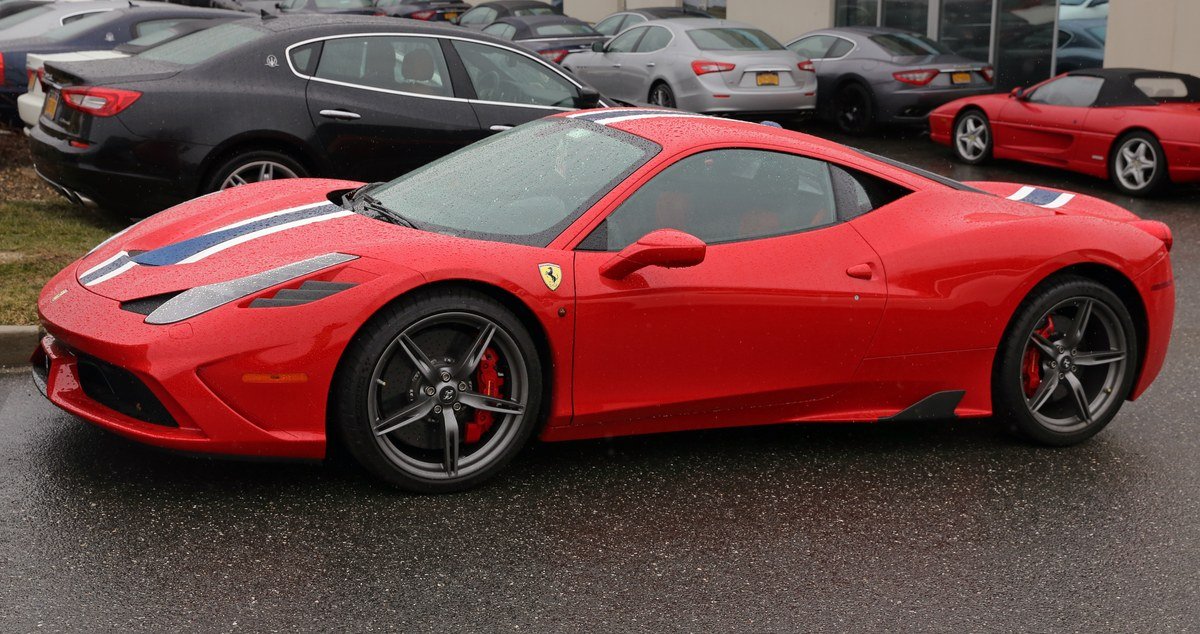

Ferrari 458 Speciale coupe, front three-quarter view. Illustrative reference photograph, not BBE inventory. Photograph by Mr.choppers, CC BY-SA 3.0. Resized and JPEG recompressed; no additional crop or scene changes. Photo remains under this license; no endorsement implied.

A different way to understand the Speciale
The Ferrari 458 Speciale’s naturally aspirated V8 is only part of its story. Side Slip Angle Control, usually shortened to SSC, helps explain why this model occupies a distinct place in Ferrari’s development of driver-focused electronics. This is an evergreen engineering guide, not a new-model announcement. For a US buyer, understanding the system is more useful than treating every electronic aid as the same thing.
Big Boy Exotics serves buyers across the United States. If you are considering a Speciale, describe the driving experience you want, not just the badge and color.
What the system measures
Ferrari’s Speciale brochure describes SSC as using lateral acceleration, yaw, steering angle and speed to assess the car’s side-slip angle. It compares the result with reference information. In plain English, it is evaluating the relationship between the car’s motion and where it is pointing, rather than looking only at whether a driven wheel is spinning.
That distinction is the interesting engineering idea. Steering-wheel position alone cannot describe everything happening in a corner. The car can be turning and moving in ways that do not line up perfectly with the driver’s steering input. Combining several measurements gives the control system a richer picture than a single signal would provide.
How it changes the response
The brochure identifies two partners: F1-Trac manages engine torque, while E-Diff manages its distribution between the driven wheels. SSC coordinates its assessment with those functions. Ferrari describes the result in terms of controllable oversteer, corner-exit traction and repeatability, with the feature working in the RACE and CT OFF settings.
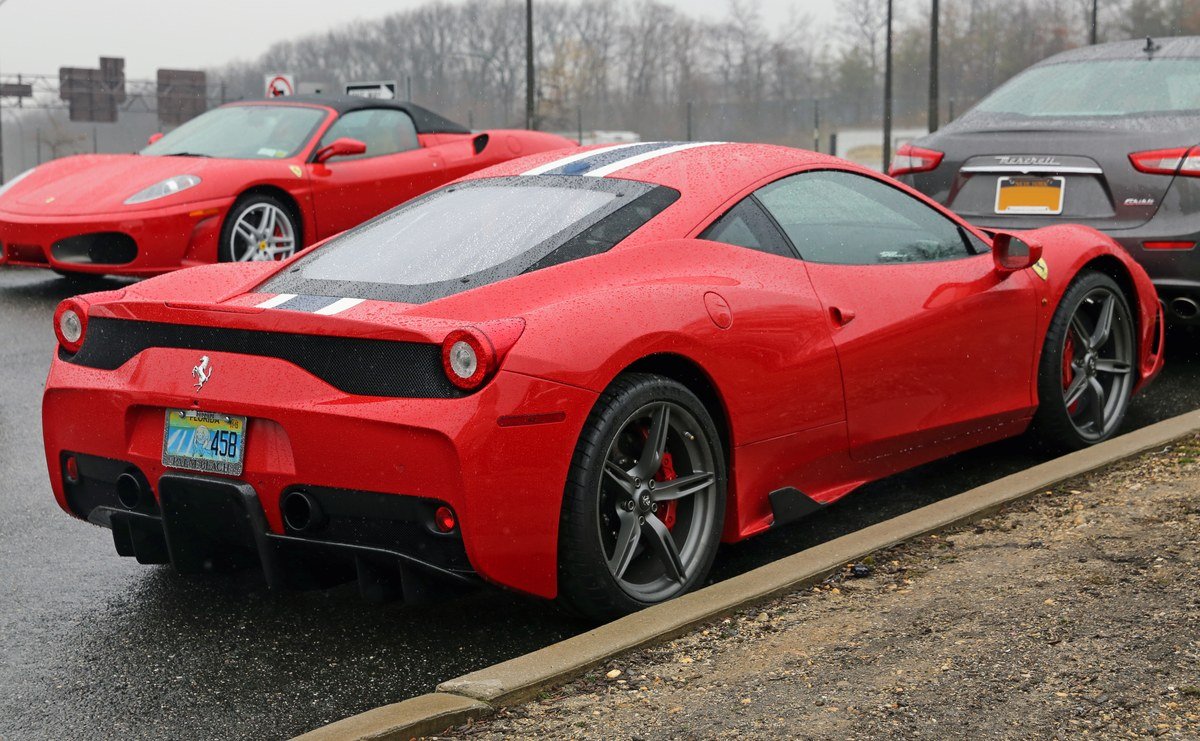
Ferrari 458 Speciale coupe, rear three-quarter view. Illustrative reference photograph, not BBE inventory. Photograph by Mr.choppers, CC BY-SA 3.0. Resized and JPEG recompressed; no additional crop or scene changes. Photo remains under this license; no endorsement implied.

This is not the same as adding engine power. The question is how the available power is used while the car is changing direction. For an owner, that makes SSC part of the car’s response and feedback, not another peak number to compare in an advertisement.
Keep the explanation specific to the car
When comparing a Speciale with another Ferrari, keep a separate note for each model’s controls and handbook. A shared acronym is not proof of identical behavior. Ask the representative to identify the manual that belongs with the car and explain the settings without relying on a demonstration at the limit.
A useful viewing record separates what you have read from what you have observed. Record the displayed messages, the controls demonstrated and any questions for the inspecting specialist. If a seller describes a modification to the electronics, request the supporting paperwork and have its implications assessed before drawing conclusions about the car’s behavior.
What this means for ownership
A prospective owner should ask for a demonstration of the correct controls and an explanation grounded in the Speciale’s own documentation. Descriptions borrowed from a Pista or F8 can create the wrong expectation. A diagnostic assessment by an appropriate specialist is more meaningful than a seller calling the electronics “race mode.”
None of this makes a public road a place to explore the limit. Electronic assistance cannot guarantee grip or compensate for every condition or driver input. The value of understanding SSC is appreciating how Ferrari combined information and torque control, while keeping the driver’s responsibility intact. For more model-specific context, visit the BBE Journal.
Tell Big Boy Exotics about your car search. We serve buyers across the United States.