
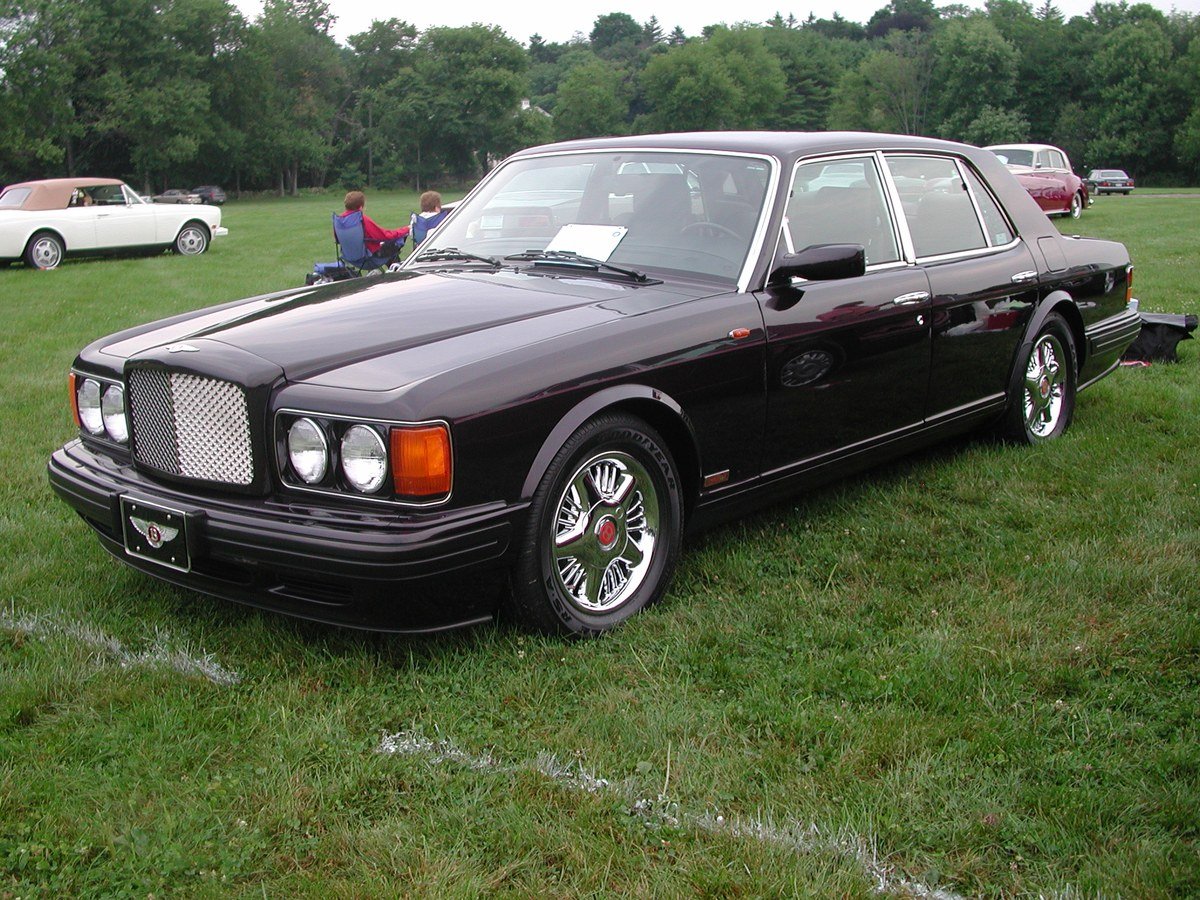

Editorial reference photograph, not BBE inventory. 1997 Bentley Turbo R at a Connecticut owners-club meet. Turbo R.JPG by Jagvar, Public domain. Resized to maximum 1200 pixels and JPEG recompressed; no crop or content alteration. Photo remains under this license; no endorsement implied.

A Bentley Turbo R deserves a buying brief that looks beyond its engine and interior. The factory’s original technical introduction treated the car as a package of changes, including its suspension, steering, wheels and tires. That makes the chassis and the car’s present specification part of the search from the beginning.
Big Boy Exotics serves buyers across the United States. If you are considering this model, a focused car-sourcing brief can describe the exact version and evidence you want to compare. This is an evergreen guide, not a new launch announcement or an offer of inventory.
The manufacturer’s June 4, 1985 service information sheet SZ/A9 introduces the Turbo R as a new model based on the Mulsanne Turbo, with changes to its specification and appearance. The bulletin is preserved in Bentley’s technical library, in TSD 4446. It states a starting vehicle identification number for applicability. That is important: a factory document has a defined scope, not automatic authority for every car carrying the same name.
The practical lesson is to avoid treating “Turbo R” as one unchanging specification. Two advertisements may use the same model name while describing cars from different points in its development. Before comparing asking prices, identify the precise year, wheelbase and market specification supported by the records. If an advertisement is vague, the missing information belongs on the questions list, not in an assumption.
Ask the inspecting specialist to match the vehicle identification number with the applicable factory information. An archived introduction is not a current service instruction or an authentication report for a car offered today. The candidate needs its own evidence trail, including any changes made after manufacture and the current guidance appropriate to it.
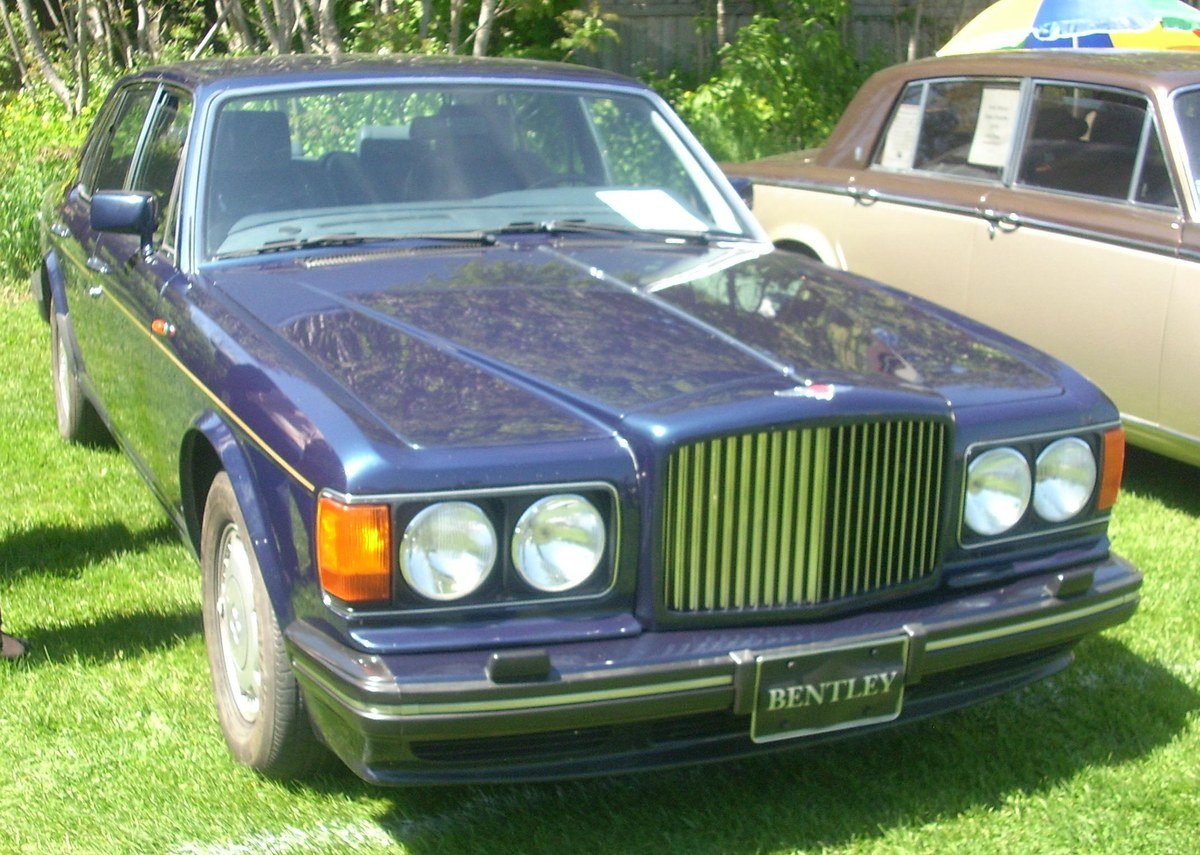
Editorial reference photograph, not BBE inventory. 1990 Bentley Turbo R at the Hudson British Car Show. '90 Bentley Turbo R (Hudson).JPG by Bull-Doser, Public domain. Resized to maximum 1200 pixels and JPEG recompressed; no crop or content alteration. Photo remains under this license; no endorsement implied.

Start with a simple three-column record: what the seller claims, the supporting document or photograph, and what remains unresolved. Use it for the car’s identity, stated specification and service history. This prevents an attractive cabin image from standing in for evidence about mechanical work, and it keeps a documented modification separate from an unverified description.
Because the original technical introduction includes chassis changes, ask the independent inspector to include the chassis in the brief. Request observations about the fitted wheels and tires, visible suspension condition and behavior during an appropriate road test. Ask the specialist to explain which findings require further investigation. Those are proposed inspection topics, not assertions that the model or the particular car has a fault.
Do not assume that a newer-looking component is automatically an improvement. Establish what it is, why it was fitted and whether the change has suitable documentation. Equally, an original-looking component is not proof of present serviceability. The useful question is how the car’s actual condition and configuration fit your intended use, supported by a qualified assessment.
Keep the financial comparison equally clear. An advertised amount is an asking price, not a completed-sale result. If you compare several candidates, record the date of each listing and what information was available at that time. Do not infer a market trend from one attractive advertisement or a single unusually expensive example.
A good Turbo R shortlist should therefore read like more than a selection of colors. It should identify each candidate accurately and show what is known about its configuration, history and condition. If the appeal is a Bentley with a more deliberate driving character, the evidence should address that character directly.
You can share your car-sourcing priorities with BBE without pretending every question has already been answered. A clear brief leaves room for specialist inspection, explains the records you require and keeps unsupported claims out of the decision.