
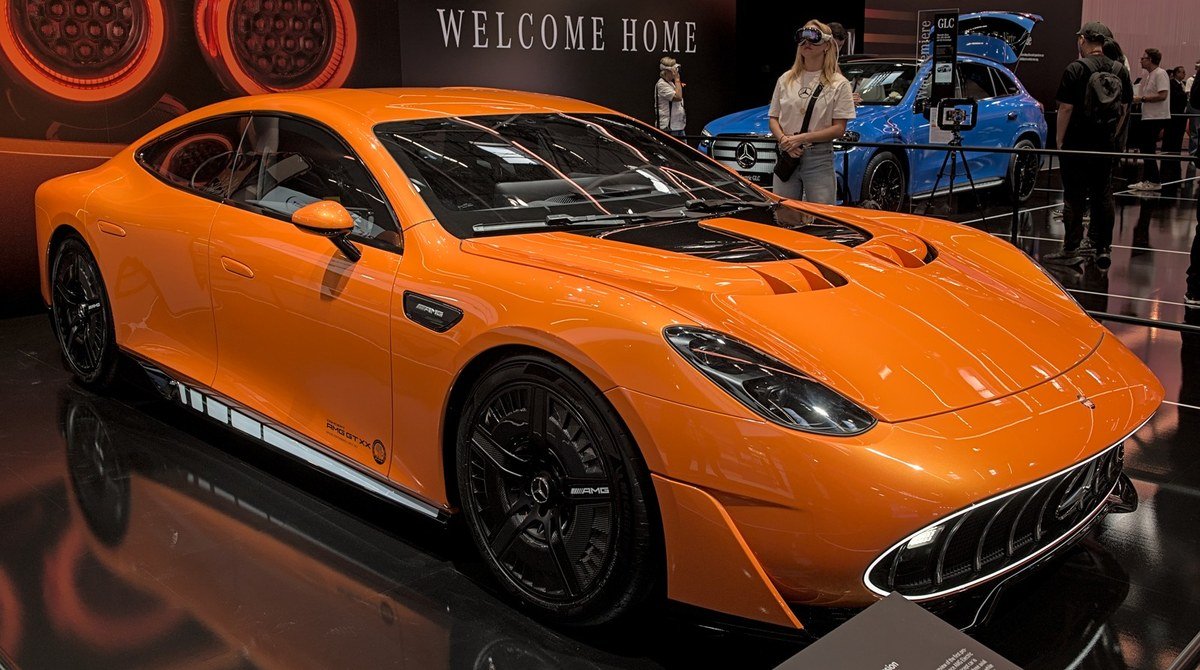

CONCEPT AMG GT XX at IAA 2025. Photograph by Alexander-93, CC BY-SA 4.0. Resized and JPEG recompressed; no additional crop or scene changes. Photo remains under this license; no endorsement implied.

The CONCEPT AMG GT XX makes a useful case study for anyone comparing electric performance cars. Before a nationwide U.S. sourcing search, it helps to understand what a spectacular charging demonstration establishes. AMG’s work connects battery cooling, charging hardware and repeated high-speed use in a way that a single peak-power number cannot describe.
A documented prototype achievement
On September 7, 2025, Mercedes-Benz reported that the GT XX reached a maximum charging power of 1,041 kW at a prototype station. According to the company, it crossed the one-megawatt threshold after half a second and sustained roughly that level for two and a half minutes. The system used a specially developed liquid-cooled CCS cable. Those details belong to a manufacturer-reported technology demonstration, not a claim about an ordinary public charger. The dated charging announcement describes the equipment.
The battery’s direct cooling is central to the story. Mercedes says electrically nonconductive oil manages temperature at the individual cells. In practical terms, rapid energy transfer creates a heat-management problem as well as an electrical one. A higher number on the station is useful only if the vehicle, cable and battery can accept it under the prevailing conditions.
That is why the duration matters. A brief spike and a sustained charging rate represent different achievements. Neither can be turned into a guaranteed road-trip stop without knowing the starting charge level, battery temperature, requested end point and the available infrastructure. The GT XX result is impressive precisely because it is a carefully described system test.
The endurance run adds another dimension
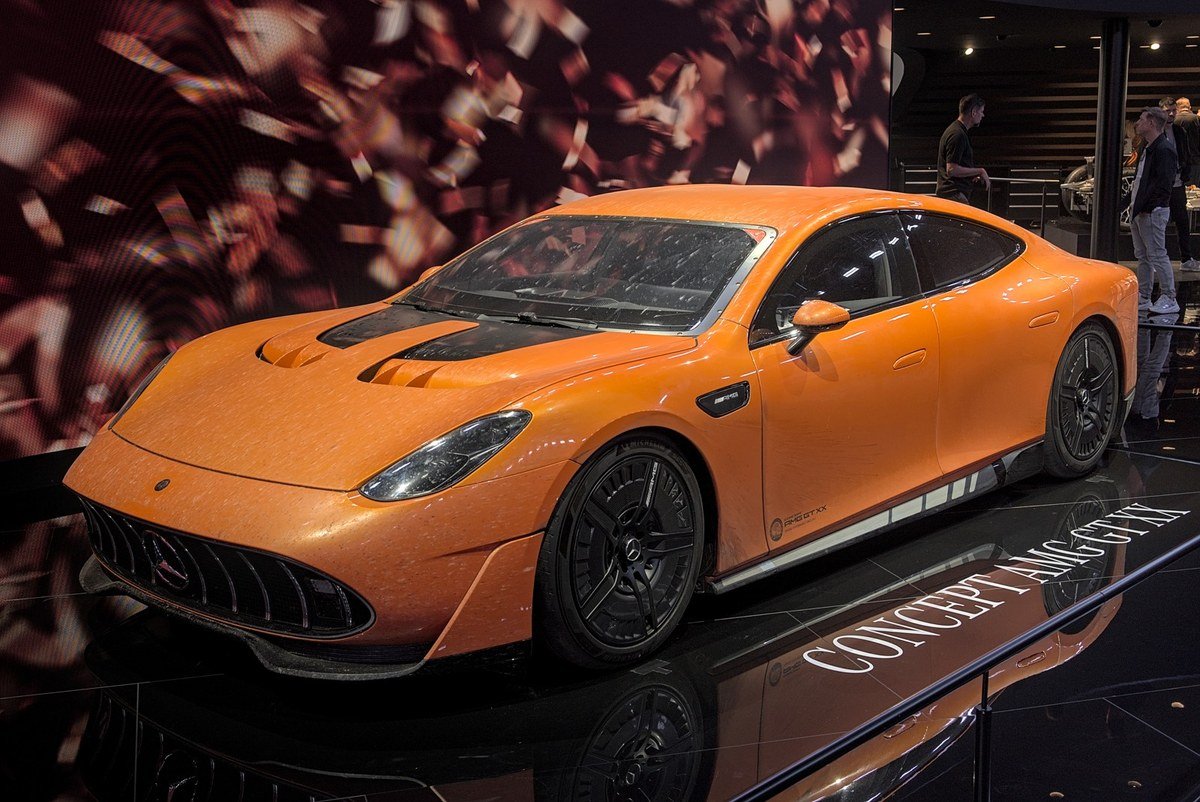
CONCEPT AMG GT XX at IAA 2025. Photograph by Alexander-93, CC BY-SA 4.0. Resized and JPEG recompressed; no additional crop or scene changes. Photo remains under this license; no endorsement implied.

The charging milestone followed Mercedes’ August 25, 2025 announcement of the concept covering 24,901 miles at Nardò in seven days, 13 hours, 24 minutes and seven seconds. The company reported repeated running at 186 mph and average charging power around 850 kW. Mercedes explained that the chosen driving speed balanced track progress against charging stops. These are manufacturer-reported closed-course results from the endurance program.
For an owner, that framing is more valuable than treating speed and charging as separate competitions. Time spent moving, time spent replenishing energy and the car’s thermal condition all shape a journey. The test suggests a useful way to think about an electric grand tourer: evaluate the complete trip, including the stops, rather than selecting one favorable specification.
Infrastructure still sets the terms
In a separate September 8, 2025 release, Mercedes described plans to introduce Alpitronic HYC1000 systems at selected new charging parks from 2026, with up to 600 kW at an individual charging point. Its infrastructure announcement distinguishes total system capacity, per-point power and further charger development. A rollout announcement does not verify that a particular station on your route has been installed or offers the maximum output.
For a real purchase, check the exact car’s charging specification and the stops you expect to use. Our electric-performance handover guide adds ownership questions about support and charging access. The photographs here show the GT XX concept; this article does not present it as an available production-car listing.
Use the experiment to sharpen your questions about a car you can actually own. Ask Big Boy Exotics to source an electric performance car nationwide around your route, charging routine, desired specification and budget.