

Big Boy Exotics serves exotic-car buyers across the United States. Tell us about your car search.
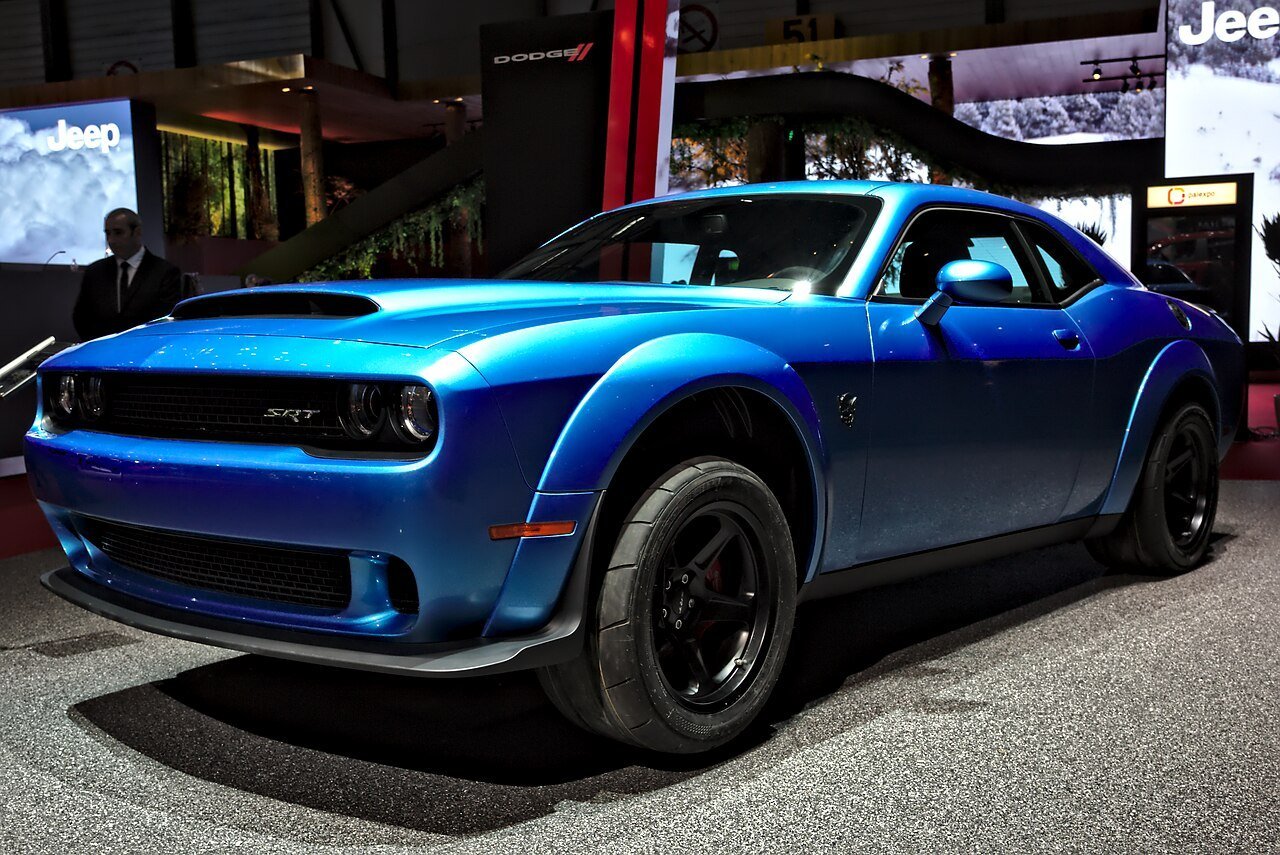
Cover: Dodge Challenger Demon 1 Genf 2018.jpg, Alexander Migl; CC BY-SA 4.0. Wikimedia resize; otherwise unchanged. Editorial model illustration, not BBE inventory. Compact-delivery image resized and JPEG-compressed; no cropping or content edits.

The original 2018 Dodge Challenger SRT Demon is remembered for drag-strip performance. One of its most revealing engineering choices happens around the run: it borrows cooling capacity from the air-conditioning system, then uses a separate after-run routine to control retained heat.
That makes the cooling story especially useful for a buyer. It explains why the car’s controls, supporting systems and intended use deserve attention alongside the supercharged V8. This article concerns the 2018 Demon, with a different factory brief from the later Demon 170.
Begin with compressed air
A supercharger compresses the air entering the engine, and compression raises its temperature. Managing that heat is part of delivering consistent performance. The Demon’s solution connects several components rather than relying on the size of a single radiator.
Dodge’s 2017 launch announcement describes charge-air coolant first passing through a front low-temperature radiator. The SRT Power Chiller then uses air-conditioning refrigerant to cool that liquid further before it reaches the heat exchangers associated with the supercharger.
Keeping the fluids conceptually separate helps. The refrigerant supplies cooling through a heat exchanger; the charge-air coolant carries heat through its own circuit. A casual description that “the air conditioner feeds the engine” leaves out the relationship that makes the design understandable.
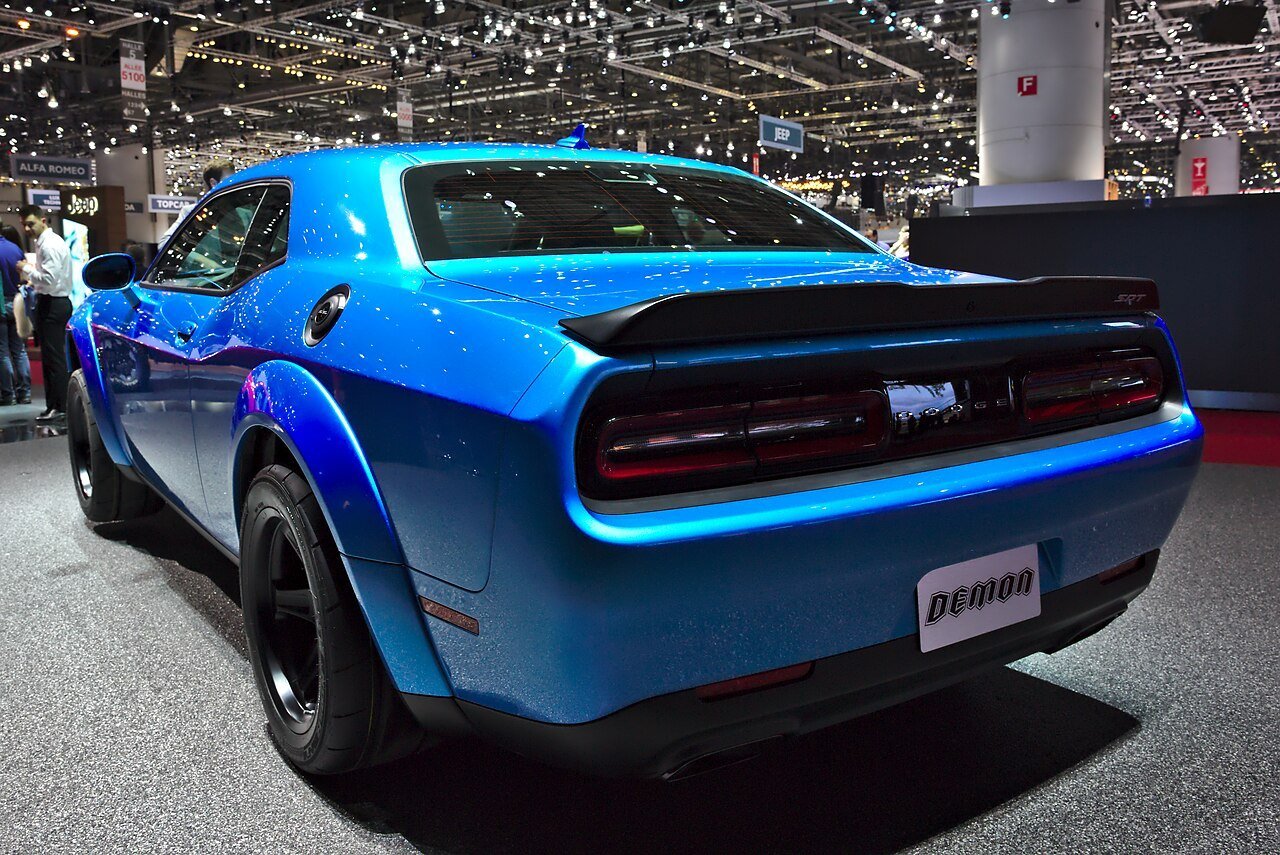
Photo: Dodge Challenger Demon Back Genf 2018.jpg, Alexander Migl; CC BY-SA 4.0. Wikimedia resize; otherwise unchanged. Editorial model illustration, not BBE inventory. Compact-delivery image resized and JPEG-compressed; no cropping or content edits.

After-run cooling has another job
The same factory announcement explains that the After-Run Chiller keeps the cooling fan and low-temperature coolant pump operating after engine shutdown. Its purpose is to reduce retained heat in the supercharger and charge-air cooling system between runs.
The owner therefore has two related ideas to understand: additional cooling while the relevant performance system is operating, and continued circulation after the engine stops. They should be demonstrated according to the correct owner’s supplement, in a suitable setting, rather than treated as interchangeable names for one switch.
For someone who intends to use the car at an organized drag strip, the handover should include the operating sequence and the temperature information available to the driver. Arrange that instruction before the first event. A busy staging lane is a poor place to learn an unfamiliar factory feature.
Engineering history informs the service brief
A June 2017 Stellantis engineering account also describes the Power Chiller’s use of refrigerant and the wider effort to manage heat from the supercharged engine. The design means air-conditioning condition has significance beyond whether the cabin feels cool.
For a specific purchase, ask a suitably experienced technician to explain how they will assess the refrigerant system, low-temperature circuit and after-run operation. Request a written account of the checks performed and any limitations. A brief cabin-temperature demonstration is only one observation.
Document any changes to the supercharger, cooling hardware or engine calibration. The important question is how those changes relate to the system you intend to operate and maintain. If your goal is an original factory configuration, put that explicitly in the sourcing brief.
Buy for a realistic pattern of use
A weekend road car and a regularly exercised drag-strip car can lead to different ownership priorities. Be honest about yours. If competitive use is planned, establish the venue’s current requirements, appropriate instruction and the car’s preparation with qualified professionals.
Keep the road test focused on ordinary drivability and condition. There is no purchasing need to reproduce a launch figure on public pavement. The Demon’s cooling ingenuity remains interesting without doing so.
Understanding where heat travels turns a memorable feature name into something an owner can use. That is the practical value of learning the original Demon’s cooling architecture before choosing an example.
Looking for a particular exotic or performance car? Start your private search with Big Boy Exotics or send your car-sourcing brief to info@bigboyexotics.com.